Tamarind and Sticky Rice

Standard

image
One of the most popular restaurants in Luang Prabang is called Tamarind: A Taste for Laos (http://www.tamarindlaos.com/). It’s just a few doors down from the guest house where we stayed and it was always packed for both lunch and dinner. This was the case even during the “shoulder season” of our visit. In fact, it was the only place so busy that reservations were required. Ange had really done her homework before our trip and discovered that Tamarind also runs a day-long cooking class (http://www.tamarindlaos.com/cooking-school/).

Each day of our reunion trip back to Asia was really special to me for different reasons. However, the Tamarind cooking class enabled me to understand Laos and the Lao people on a deeper level, so much so that I expect it will leave a life-long impression.

The rice paddies along the Mekong River basin that I wrote about in my last blog (https://sharoncombesfarr.com/2014/03/11/the-mighty-mekong/) grow a special kind of rice called “sticky rice,” known elsewhere as “glutinous rice.” I thought sticky rice became so because of how it is cooked. That is not the case. It is actually a unique strain of rice and it is the driving force behind Lao cuisine.

20140312-080014.jpg

Relying on sticky as opposed to regular white rice means that many Lao foods are dips and not soupy or saucy — unlike Thai curries, for example. Laotians use three or four fingers to ball up the sticky rice and either dip it into pastes or dips or push meats and vegetables onto the sticky rice to eat it. Soupy dishes just won’t work for this and chop sticks are not conducive to eating it either.

Another interesting thing about Lao cuisine is how it is made and cooked. They do not need stoves or even woks. The four necessary implements for making Lao dishes are: fire — like a BBQ pit or any other open flame, a pot, a steaming cone, and a deep mortar and pestle set. Barbecued meats are very prevalent, as are steamed dishes made in little bamboo leaf packets to keep the meat moist and flavorful.
image
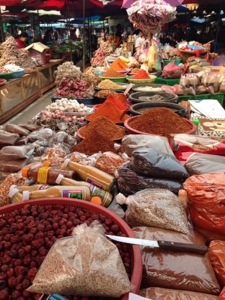
Because the Mekong provides great soil, seemingly unlimited varieties or fruits and vegetables are available as ingredients to the cuisine. A few of the most prevalent flavors are tamarind (this is a fruit that tastes most similar to fig), small eggplants, lemongrass, Lao mint, and Lao lime. To give us an impression of the endless variations for ingredients, we began our cooking class at Luang Prabang’s morning market. As with all cuisines, starting with fresh local ingredients is fundamental.
image

image

In terms of meats, Mekong River fish (some have described this as a type of catfish and others, as like tilapia), pork, chicken, and water buffalo are the most common. I personally found the fish and the water buffalo to be the tastiest.

In my day-long cooking class, I learned how to prepare sticky rice, and to make and cook four traditional Lao dishes: eggplant dip, buffalo laap, fish mak, and chicken stuffed lemongrass. The actual meal I made and ate is pictured below:

image

Online, I found similar recipes to what we were taught fairly easily. A version of Lao eggplant dip can be found here: http://avocadopesto.com/2013/04/04/lao-eggplant-dip-jeow-mak-keua/. Here’s a great laap recipe from Epicurious: http://www.epicurious.com/recipes/food/views/Chicken-Laap-102260. This is an American adaptation of fish mak which uses aluminum foil instead of a banana leaf to make the pouch: http://nanthavongdouangsyfood1.blogspot.com/2012/12/mok-bha-lao-style-spicy-steamed-fish.html. And, finally, here’s a great chicken stuffed lemongrass recipe that includes a ton of great photos: http://avocadopesto.com/2013/04/07/chicken-stuffed-lemongrass/.

Knowing how to make the laap recipe is something that is probably going to change my life. It enables an endless and flavorful variety of healthy meals made from fresh herbs, vegetables, and ground meats that I expect to serve either as one dish salad-like meals or as lettuce wraps. I cannot wait to try it at home. I also cannot wait to show my husband a trick for cutting and squeezing limes.

If you also want to try cooking Lao cuisine at home, these are the best links I found around the Web:

1. http://www.tamarindlaos.com/about-lao-food/
2. http://www.sbs.com.au/food/cuisine/lao
3. http://www.tourismlaos.org/show.php?Cont_ID=9

But, better yet, get over to Luang Prabang at take the Tamarind cooking class yourself. You will not be disappointed.

The Mighty Mekong

Standard

20140312-080027.jpg

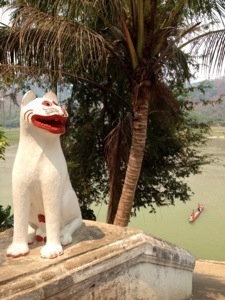
Laos is land-locked, bordered by Thailand to the east, China to the north, Vietnam to the west, Cambodia to the south, and just a tad by Myanmar (Burma) to the northwest. However, you wouldn’t know it where we are. That’s because the Mekong River, the 12th longest river in the world and the longest in Southeast Asia, after winding it’s way from Tibet through a chunk of China, also worms through western and southern Laos. And, it has a lot of tributaries, too.

The river creates very fertile soil in the extended river basin and also makes it easy to transport both goods and people. On land, rice is the biggest crop by far. Others include peanuts, corn, tamarind, soybeans, eggplant, and cucumbers, among many other fruits and vegetables. Local markets are plentiful with nature’s bounty in every hue.

I’m in Luang Prabang, the original capital of Laos that was founded in 1353, because of its fertile location along the Mekong. For the same reason, through the centuries, it came under the influence of various neighbors like the Siamese, Burmese, and Vietnamese, and, in the 20th Century, was a colony of France.

All of these cultures are evident here in many ways, including the architecture and the food, along with very strong influences from both Buddhism and Animism. It’s hard to detect that Laos is a Communist country, having become so after Vietnam defeated the French in 1954 — and that it did not open to tourism until the break-up of the Soviet empire in 1989. Due to its rich and evident culture and well-preserved history, Luang Prabang became a UNESCO World Heritage Site in 1995 (http://whc.unesco.org/en/list/479).

All of the above, combined with the beautiful natural environment, make Luang Prabang a tremendous tourist destination. This has lifted up the economy of the entire province. Laos is still one of the poorest economies in all of Southeast Asia, but it grew by more than 8% annually in 2013 and is continuing at that pace (http://www.worldbank.org/en/country/lao). This province, certainly, is well above the average. The extended area of Luang Prabang has a population of 50,000. Our local guide that took us up the Mekong said that 90% of the folks here make their living through tourism.

You would not believe the tourist infrastructure here and yet there’s something about it that isn’t “touristy.” Even as you pass through markets that cater to visitors or visit villages with a tour guide, seemingly all of the Lao people have a friendly, laid back style and do not try to push you to make a purchase. The historic downtown is certainly almost all about tourism, with markets, storefronts, tuk-tuk drivers, restaurants with large English translations, and money exchange kiosks. But, you have to picture all of these things sending off a laid back vibe. So much so, that waiters don’t even come over to take your drink order, unless you ask. My theory is that they’re waiting for you to close the menu or that if you want something, you’ll let them know.

I strongly recommend that anyone traveling in SE Asia already or others just looking for a unique and unforgettable vacation experience come here. The only place I’ve been that is remotely similar was Guilin, China back in the 90s. That’s the best comparison I have. But Luang Prabang is more relaxing, more cultural, and has a much wider variety of amazing things to do.

Getting back to the subject of the Mekong River, my next blog post will feature how the agriculture that grows along it influences Lao cuisine.

For more information about the Mekong River, go here: http://www.britannica.com/EBchecked/topic/373560/Mekong-River.

A great intro to Laos is here: http://en.wikipedia.org/wiki/Laos.

The best traveler’s resource on Luang Prabang I found is here: http://www.lonelyplanet.com/laos/northern-laos/luang-prabang.

20140312-075850.jpg

20140312-080005.jpg

20140312-080014.jpg

20140312-211245.jpg

20140312-211254.jpg

20140312-211312.jpg

Starbucks and Baozi

Standard

20140308-160852.jpg

image

Friday was Ange’s birthday and she awoke, after only about 4 hours of sleep, on a mission. She went directly to the concierge and asked for directions from the Peninsula Hotel to two locations — the closest Starbuck’s and the closest shop with baozi. “Bao” means “bread.” This makes sense, since these small breakfast dumplings have a skin that is breadier than most Chinese dumplings (they also have delicious pork inside). Luckily, the concierge drew a handy little map, making both purveyors easy to locate. Of course, we went in search of the coffee first.

image

As you might have guessed already, this post isn’t about our breakfast, per se. Instead, it’s about how the two components of our breakfast really reflect the dichotomy of modern China, at least for me. Having a Starbucks on many Beijing street corners is the inevitable evolution of things here. The quest for things foreign and the embrace of controlled capitalism, combined with the humongous domestic market, made it inevitable. It was Avon and McDonald’s back in the early 80’s. Then, it was General Motors and Motorola when I lived here in the 90’s. Now, it’s Starbucks and Apple stores, and, can you believe it, even “House of Cards?”

The common thread of most of the Western things found here, then and now, is that they are largely materialistic and deemed relatively harmless by the government. Why not give your growing population of consumers these foreign goods that are, in many cases, actually made in China? What the Chinese have been less welcoming of is free thinking and other threatening Western ideas. At the turn of the previous century there was a slogan “Chinese learning for fundamental principles and Western learning for practical application.” Learn more here: http://en.wikipedia.org/wiki/Zhang_Zhidong.

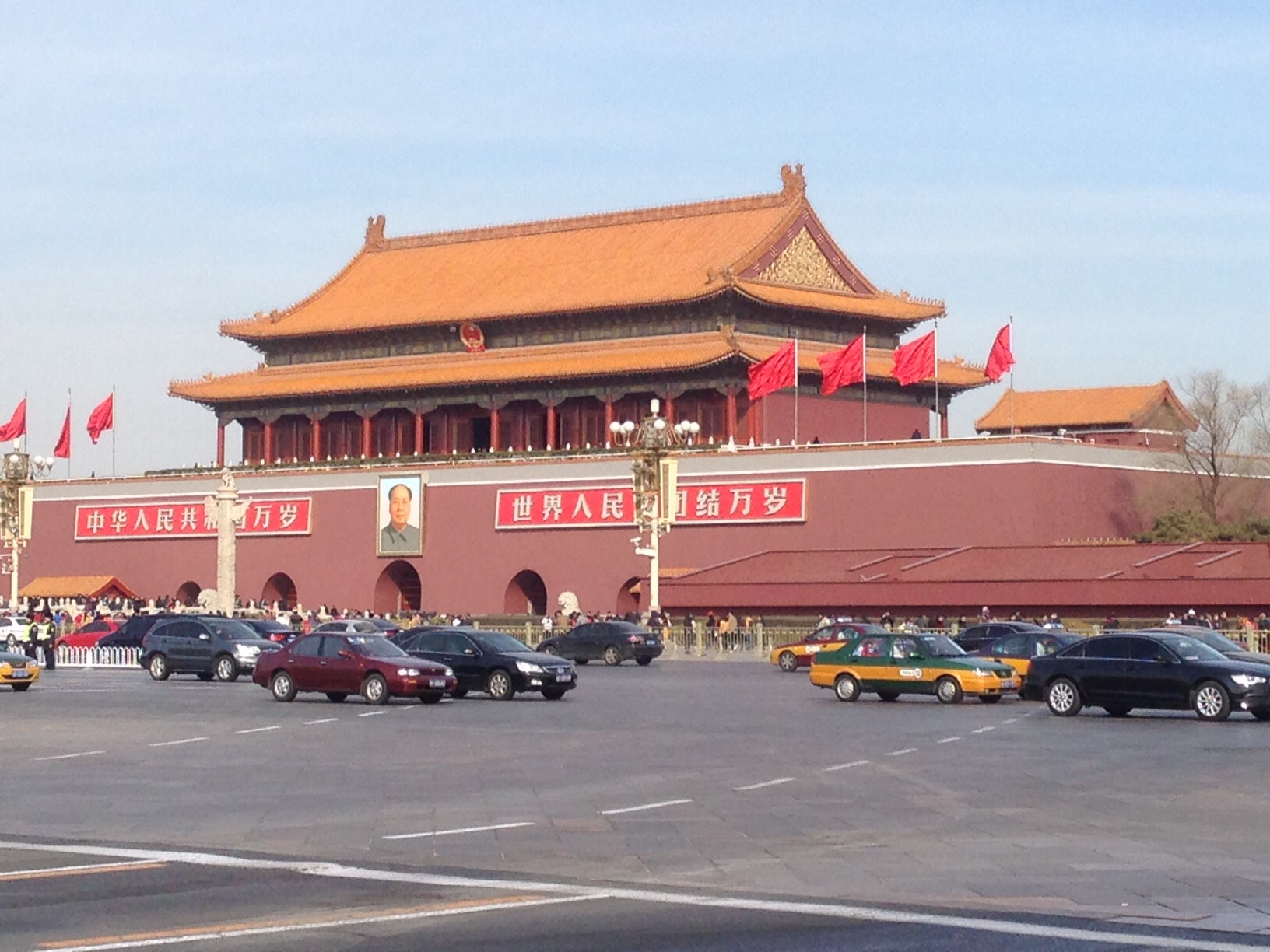
That this sentiment hasn’t really changed all that much manifested itself during my short stopover in Beijing in an interesting way. It was amazing to find free Wi-Fi everywhere, along with the Starbucks and iPhones to go with it. However, imagine my frustration upon discovering that Facebook was blocked and I was unable to upload my selfies in front of the likeness of Chairman Mao and those cute lion statues. In short, China’s lack of tolerance prevented me from alerting my nearly 500 “friends” that I had returned to my old stomping ground.

Little did I know that the Chinese government has been blocking access to Facebook since 2009, when it figured out that separatists in its far northwestern Xinjiang province had been using it to communicate with its followers to coordinate demonstrations against the government.

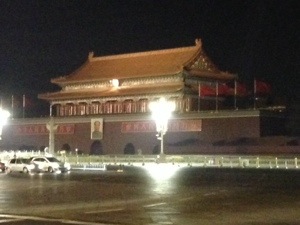
Of all the things that could frustrate me about Beijing (like taking over an hour to navigate the airport bureaucracy to track down our luggage, the ridiculously tight security presence on Tiananmen Square, and the prevalent line-cutting mentality of the Chinese), what does it reveal about me that blocking my access to Facebook was the only thing that really irked me?

Getting back to Starbucks, it strikes me that the green and white mermaid symbol alerting passers-by to the availability of little cups of familiar, high quality, but extremely high priced, “joe” is also a fitting symbol of the modern service industry, the new millennium, youth, and capitalism, all at once.

For all the ways that Beijing had changed over the 18 years that I was away, the essence of the city and the comfortable feeling it gives me were the same. The amazing food. The flashes of color. The welcoming nature of the people. It honestly still felt like home. When I asked, “Ni hao?” (“How are you?”) to nearly everyone I passed, they all paused, smiled broadly and said, “Ni hao.” Imagine if I had said, “How are you?” to everyone I passed in New York City. They would probably have me committed.

The little mom and pop shops nestled in between the larger modern stores, like the one where we ate our baozi, are further evidence that the essence of old China still remains. The friendly proprietors invited us to sit at their sole outdoor table, as if we were old friends. As we sat, happily drinking our Starbucks and eating our dumplings, dozens of well-dressed workers in their twenties and thirties stopped in to get baozi, soy milk, and other breakfast delicacies to go, as they hurried off to work.

After a very satisfying breakfast, in more ways than one, Angela stood up, turned to me and said, “Starbucks and baozi. My job is done. Sharon, you take it from here.” I steered us purposefully in the direction of the Tiananmen Square and the Forbidden City. And, it was not lost on me that this part of our morning’s itinerary represented another dichotomy in Chinese history, the legacies of feudal times and the Maoist era….

20140308-161006.jpg

image

Throwback Thursday

Standard

20140307-013058.jpg

It’s my ultimate “Throwback Thursday.” I landed in Beijing earlier today, after more than 17 years away. There’s at least one volume that could (and will) be written about the nearly three years of my life spent here. The short version is that I started out in a major depression and climbed my way out, bit by bit, until I started to resemble the confident woman that I am today. True story: In my first five months in Beijing, I went from obsessively watching the OJ Simpson trial on CNN to actually working for CNN. And, I still have my press pass to prove it.

Thankfully, I haven’t come back alone. I’m with an old college pal from my George Washington University days, Angela Casey. It’s odd that we took so many of the same courses with the same professors and were only one year apart in school, yet didn’t meet until my senior year. Ange graduated from GW with a degree in East Asia Studies (China Concentration) in 1991. Mandarin was also my language, but my degree was International Affairs (Mandarin Chinese) in 1990. Once we finally met, we became fast and close friends.

After school, to say that we kept in touch is an under-statement. We both fell for the same guy over the summer of 1991, in D.C. We met up in San Francisco in 1993, then Beijing in 1994, and Hong Kong, Malaysia, and Singapore in 1995. And, finally, at my home in Vermont in 1996. After that, we inexplicably lost touch at some point in late 1999 or early 2000, when Ange went off to the UK and I moved to Arizona.

We credit Facebook for rekindling our friendship late last summer. There were several Angela Caseys on FB, but only one with the graphic of bamboo as a profile picture with the statement that she speaks Mandarin, Cantonese, and French. I knew immediately that she was my Ange.

Shortly after re-becoming friends, Ange drove up from her childhood home in the Poconos to stay with me and Bruce in Vermont. Over that October weekend, we plotted this Asia trip to meet up with my step-daughter Erin in Laos. It seemed only fitting to begin this new journey where we met up 20 years ago, right here in Beijing.

I still need to reflect on the vast differences — and the similarities — of the Beijing in 2014 with the one I knew well between 1994 and 1997, before I can say anything meaningful about it. Not to mention how different we both are as women in our mid-40’s compared to the exuberant self-proclaimed world travelers we were in our mid-20’s. However, what I can share now are a few photos and will add more soon.

And, I can say from the very bottom of my heart that there’s no one I’d rather come back to Asia with after all this time. Thanks, Ange, for stepping back into your role as willing partner in crime (so to speak) after such a long time.

20140307-013440.jpg

20140307-013451.jpg

20140307-014200.jpg

Where Are You Going?

Standard

Tomorrow, I begin a 10-day trip to Asia with my old college pal, Angela Casey.  I have one foot out the door already. Recall that this trip is my insanely generous reward to myself for following through with my unexpected and difficult New Year’s resolution not to drink alcohol this year.

About twenty years ago, Ange and I had the time of our lives palling around Singapore, Hong Kong, Malaysia, and Mainland China.  Now, we’re in our mid-40s and we’re going to try to re-capture some of our glory days on a mission to check-in on my step-daughter who’s in the middle of a 4-month journey of her own. Erin and her friend Abby’s travels are documented in a separate blog here.  It’s not lost on me that Erin and Abby are about the same age now that Angela and I were back then.

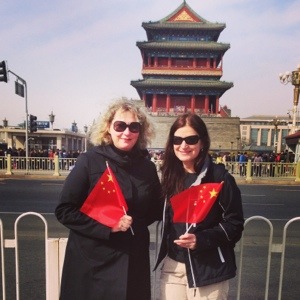
In the morning, Ange and I will rendez-vous at the Port Authority in NYC to head over to JFK Airport together. Our first stop is Beijing, my old stomping ground. Thinking about this part of our trip motivated me to quickly thumb through about 1,000 old photos. A few shots of me and Ange together in the 90’s are below:Image

Image

Image

I also couldn’t resist looking at a few of my old journal entries from the “China Years” and discovered that I had some Beijing anger issues back in 1996. A journal entry from October became a short essay in my Christmas letter that year titled  “Beijing, Bejijing, where are you going?” It’s not exactly a promo from the Beijing Tourist Bureau.  However, it’s how I felt at that moment in time, as an expatriate living and working in Beijing. 

Beijing.  Beijing.  What do I really think of you, you capital city of this huge ‘socialist’ country?  You’re no longer protected from the peasants.  Your economy remains a bubble, but the whole country is moving with you, or against you, or in spite of you.  You have it all, don’t you?  All but clean air.  I mean you have history; you have culture; you have the old and sprouting up around and over the old is the new.  The results of ‘development’.  You have cars and the pollution that accompanies them; pollution which will someday rival even Bangkok.  You also have the coffee shops and the jazz bars and even a bagel shop or two.  You must have known that Dunkin’ Donuts was only a decade behind McDonald’s and Avon.  Or had you bothered to consider this?

And, look at your populace.  Women with their tough-as-nails, calf-length nylons, their penciled eyebrows, and their sequined sweaters.  They’re almost fashionable, at least compared to the Russians who roam your streets in search of bargains to bring home to their starving nation.  And your men with their PVC briefcases and pagers.  They’ll be real businessmen someday.  But you can still see the difference between your own and your Singaporean, Hongkonger, and Taiwanese brothers, can’t you?  Your perms are a little too dry, yet.  And your shoes a little too dirty.  But you’re almost there.

You will arrive soon.  But where is it that you think you’re going?  You are rushing ahead so quickly with unparalleled determination.  But what are your goals?  What is your raison d’être?  Your 9th five-year plan.  What does that say?  What unrealistic jargon does it use to unite and confuse you as you approach the future?  I’m only asking because I want you to care, it’s not that I give a shit.  I’m just an observer here.  But I am thinking deeply as I observe.  I ask questions of your taxi cab drivers, your shop keepers.  And I sympathize with their confusion.

They own property, you know, these socialists you have raised.  You let them buy because you wanted a piece of the wealth that originated in the south and spread to the hinterland – not like wildfire – but like something.  You let them buy, but you’ve made it so difficult for them to sell.  What kind of ownership is that anyway?  You’ve confused them with this Chinese characteristic of capitalism or socialism or whatever it is you call it nowadays.  And your billboards confuse us all – foreigners and Beijingers alike.  You want your children to “seize opportunity”; you want your own reforms to “deepen”; you hail an “expansion of openness” and an “acceleration of development”.  Yet you caution all to “maintain stability.”  You fear another Tiananmen.  Or at least you want your children to fear that.  It’s a tall order, this billboard you’ve erected on Chang’anjie, a stone’s throw from Tiananmen Square.

Tiananmen says it all, doesn’t it?  That gray expanse from the Forbidden City to the Gate itself.  So symmetric it all is, with the Chairman’s mostly synthetic body on view right smack in the center of it all.  But at least you proved that your children can line up like the civilized barbarians.  They do so daily from 8:30-11:30am; I’ve seen them do it.  Quickly and orderly they wait in the queue to glimpse their deceased Chairman.  “Ten thousand years” to the preserved flesh of the man who became more than a man.  The icon of Mao.  The one who fucked you all over in his paranoia.  “Ten thousand years to Chairman Mao.”  Arguably the second most influential Chinaman who ever walked the earth.  Mao, you will fade, though.  You will not live in human memory 10,000 years.  You are not Confucius, didn’t you know?

So, Beijing, where did you say you were going?  Please let the world know when you get there, won’t you?  We are all interested.  And we’re almost as confused as you are.

Ange and I will pause less than 24 hours in Beijing, as we journey toward Laos. As you can imagine, we plan to make the most of our brief return to one of our old stomping grounds. It will be very interesting to see how much (or how little?) things have changed in the past 18 years. 

Testing. 123. Testing.

Standard

This is a test of my ability to publish a blog post on a mobile device.

I am heading to Beijing with my long-time great friend, Angela Casey, on Wednesday.

We’re planning an amazing “Throwback Thursday” photo shoot on Tiananmen Square as soon as we get organized (and after we polish off some Peking Duck at the Peninsula Hotel),

Then, Ange turns 44 on Friday and we head over for “one night in Bangkok,” before getting to our actual destination on Saturday morning, Luang Prabang, Laos.

We are extremely stoked to be meeting up with the Two Mermaids, Erin Farr and Abigail Siegel, in Luang Prabang.

Adventure highlights in Laos will include a day hiking and kayaking to the Pak Ou Caves and Kuangsi Waterfall, an unforgettable trip to an elephant preserve, and Laotian cooking lessons.

We’re expecting the unexpected and hope for an unforgettable trip. I promise to post thoughts and photos as often as Wi-Fi affords me the opportunity.

When In Doubt, Haiku

Standard

Working on my memoir last year, I re-discovered my old journals. Although filled with many boring entries, every so often, the pages revealed heartfelt poems, prose, and short stories. I was particularly struck by my poetry and regretted that I had not kept writing poems through the years. Seeing that some Facebook friends are writing haiku as statuses, I decided to reacquaint myself with this type of writing.

Haiku is a Japanese poetic form. Traditionally, these poems are 17 total syllables in 3 lines, comprised of 5 syllables for the first and third lines and 7 syllables for the second line. Here’s a good introduction on haiku and how to write them.

Many modern writers do all sorts of things and call them “haiku.” The purist that I am, I prefer the challenge of forcing myself to articulate my thoughts economically, so I stick to the traditional pattern, like this:

When in doubt, haiku.
Just seventeen syllables
To express your thoughts.

In the past, many Japanese haiku were about nature and the last line contained some sort of surprise, twist, or change. I can see why. When I started trying this out for myself, I discovered first-hand how easy it is to be inspired by nature and to see life lessons within it.

The three haiku below, I wrote in the same week, before, during, and after a major snow storm:

Clear. Crisp. New Year’s Day.
Blue skies slowly turning gray.
Calm before the storm.

Quiet, peaceful morn.
Dark with no promise of light,
‘Til after the storm.

Tracks on snowy mound.
Signs of life after the storm.
Can’t hide Beaver’s lodge.

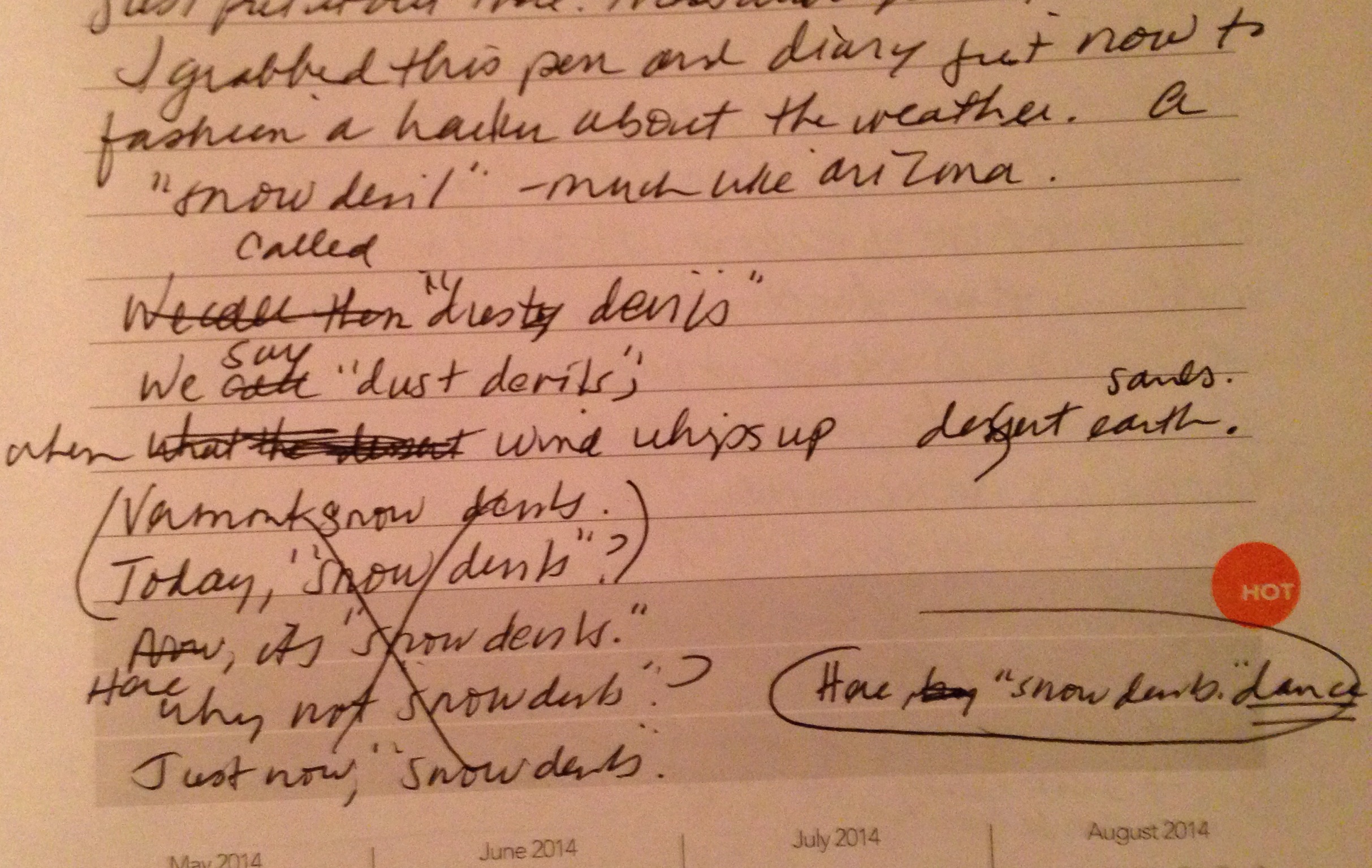
My favorite of my recent nature-related haiku was the most difficult to write. I saw snow whipping up and traveling across our field and I said ”snow devil” out loud to myself.  Then I laughed, realizing that I was talking to myself and also that this was not an actual term. So, I decided to explain it in a haiku.

Image

This is the final result:  

We say “dust devils,”
When wind whips up desert sands.
Here, “snow devils” dance.

Forcing my thoughts and feelings into these patterns has gotten somewhat addictive. On a particularly long and pleasurable training run with my dog the other day, I decided to articulate my feelings in a haiku. 

My running partner,
Always listens, never tires.
Four-legged “best friend.”

My dog, Cleopatra, has been the subject of a few other recent poems, including these below, written on different days when reflecting on playing fetch with her before my 90 minute drive to work:

Tossing ball for pup.
At peace, playing in the rain.
Montpelier waiting.

Playing fetch at dawn.
Reluctant moon. Purple skies.
Warm despite the cold.

Sometimes, I want to hold fond feelings close to me and preserve them, so I compose a haiku. This happened twice this winter, while I was skiing. The first one was inspired by a great time I had with my nephew Liam.  We composed the first two lines together on the chairlift and each had a different third line. My version is below:

Good light and powder,
Rewards after the clearing.
Welcomed by old knees.

The second flooded over me while I was skiing with my friend Blair. I had to pause on the slopes to count syllables with my ski pole in the snow, until the haiku was completed and memorized.  It refers to a close friend of mine who died four years ago. He’s the person who finally got me skiing again after nearly a 25-year hiatus:

First mogul run since
Stephen said, “You can do it!”
Great times, then and now.

Finally, I come to a haiku that requires more explanation than I can afford here. It’s about my maternal grandmother and the unintended impact her unorthodox and complicated personality had on me as a child. Hopefully, the words can speak for themselves, at least on some level:

Mémère’s voice inside
My head is unforgiving.
Self-doubt in disguise.

I hope you enjoyed this blog, despite its departure from my usual topics. Please feel free to comment with some of your own haiku. I’d really love to read them.

From the Mailbag

Standard

Image

Since the idea of my New Year’s resolution and this blog came to me rather suddenly over the holidays, I didn’t have time to develop any expectations. It took me completely by surprise that 100 people would actually “follow” me and that dozens would take time to comment here or privately. These messages range from support for my journey, to thanks for offering an inspiring example, to challenges to my assumptions and opinions. Increasingly, folks are asking thoughtful questions about me and this experiment. This “From the Mailbag” post addresses three of the most thought-provoking responses from this past month.

Why did you really start this blog?

My sister-in-law, Martha, asked me to expound upon the other reasons, besides losing weight and running faster, that led to my decision to start this blog.

Several weeks ago, I wrote about how saving money was my #9 of 9 reasons for this project. In fact, I have journal entry in my “Dry Year” diary that was written on January 7th titled “Top 5 reasons why I’m not drinking.” The list ran longer than 5, but didn’t quite reach 10. The order below is exactly as written, and may or may not reflect the order of priority.

1. I fear becoming an alcohol abuser, because of family history.
2. I’ve recently done a lot of personal research for my memoir and the theme of alcohol over-consumption is one that is difficult to ignore.
3. I want to see if I can do it.
4. I’ve tried with moderate effort and no success to cut back consumption in the past.
5. I thought it would help me lose weight.
6. I thought I would free up time for more important things.
7. I thought it would be a very interesting topic for a blog and I need one to promote my upcoming memoir.
8. I thought it might make me a faster runner.
9. To save money.

Is it common for someone to quit drinking for just a year?

This question comes from fellow blogger, Terry McCarthy. As he put it: “I don’t think I’ve ever heard of anybody quitting for a year. As they say in AA, take one DAY at a time.”

Many more people have written about quitting drinking for a month or even 100 days. And, although I didn’t know this when I started this project, I have found a few people who also tried this for a year and wrote about it, including this guy and this woman. My true goal regarding alcohol is moderation, so I didn’t go into this thinking that I would quit drinking forever. I felt alcohol was preventing some of my other goals, so I wanted to take alcohol out of my life for a significant length of time. On one level, this resolution is a social experiment.

If you achieve your goals during your “dry year,” why bother drinking again?

This comes from my friend Rose, who is a teetotaler herself: “I love reading about your journey and I’m rooting for you! Are you thinking of quitting for good? I mean, after you succeed in losing the weight, and you will, and running so hard that you get your PR, why go back to it? Just a thought.”

This is similar to Terry’s question, but is more direct. Of all the comments I have received, I have thought about this one the most. It is much easier for me to think about this as a one year “project.” Once I’m further down the road, I will have a better idea of what the ideal future should be. No one knows what the end of this year will bring. As I get deeper into this journey, I may come back to this question several more times.

I hope that you’ll keep the comments and questions coming. If so, I’ll do a “From the Mailbag” post every month.

Pushing Past the Plateau

Standard

The connections between drinking or not drinking alcohol and gaining or losing weight are obvious and well-documented.  As I previously stated, one of my motivations in pledging to not drink for a solid year was to drop a few stubborn pounds.  Thus far, not drinking has helped me to lose eight pounds with relative ease. Yet, for the past month, I’ve been going up and down in a range of two-three pounds, at the same “weight plateau” that has irked me since before my 40th birthday.  Having given up so much this time, I am determined to break through and, once and for all, return to my goal weight. This raises two questions with me: Why am I at a plateau? And how do I push past it?

The Mayo Clinic does a great job of describing this plateau. It happens when your metabolism slows as your body gets used to the new level of reduced calorie intake, something they refer to as a “new equilibrium.”  Unfortunately, there’s really only one way to push past it, according to the Mayo folks: “To lose more weight, you need to increase activity or decrease the calories you eat. Using the same approach that worked initially may maintain your weight loss, but it won’t lead to more weight loss.” Translation: losing 12 more pounds is going to be hard work. 

Luckily, there is by far more helpful advice on this topic than for any other I have researched for this blog. Let’s check in with Jillian Michaels, weight loss and fitness guru, and the star of the “Biggest Loser.” She thinks the plateau is a myth, so I need to honestly ask myself a few questions. First, am I keeping track of my daily calories? Yes. I’ve been using MyFitnessPal to track everything I eat, as well as all of my exercise. Secondly, am I trying to lose vanity pounds? To answer this question, I need to understand how much of my body is actually fat.

Image

Previously, I calculated my Body Mass Index (BMI). For my height of five feet, seven inches, a “healthy” BMI is between 18.5 and 25. Checking my current BMI at my weight plateau of 150 pounds, I see I’m in that range, with a BMI of 23.5. However, after reading more about BMI, including this NPR article with 10 reasons why BMI is bogus, I understand that BMI was developed over 100 years ago and is a straight formula based only on height and weight.  It doesn’t really take into account anything important – such as gender, age, or musculature.

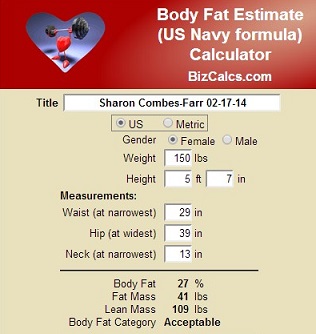
Sadly, this means I had to take out my tape measure so that I could estimate my actual body fat. I used this calculator from the U.S. Navy. I took three measurements: my waist at the narrowest point (29 inches), my hips at the widest point (39 inches), and my neck at the narrowest point (13 inches).  This estimates my body fat at 27%. I know that is too high. According to this chart, it’s in the middle of the “average” category for women. I don’t want to be average. I want to break into the top end of the “fitness” category, which is between 21% and 24%. Some of you will, no doubt, debate this. However, my answer to Jillian’s second question is, no, I am not trying to lose vanity pounds.

Given that, I need some solid strategies to lose 12 more pounds to get to my goal weight of 138. Among several other suggestions out there, WebMD has 10 tips for moving beyond the plateau, as do About.com and ActiveBeat.com. I don’t know about you, but 10 things seems like a lot to keep track of. The solution to this, as with all things, is to create a spreadsheet. I tracked the tips from these three sources and found they contained a total of 22 different tips. I was able to scratch off a bunch of these, because I am already doing nine of these things, and, frankly, another five of them just seemed lame.

My analysis left me with eight things to focus on, five of which are diet-related and three about exercise. On the food side, I need to beware of calorie creep, celebratory calories, and restaurant overeating, and try to manage my hunger with low-fat protein and by eating more fruits & veggies. This seems like solid dieting advice. At the same time, I need to add in more exercise, particularly by trying to be more active during the day and by adding strength training.

Like I said, this is going to be hard work. Wish me luck!

Lose Weight, Run Faster

Standard

As you can imagine, taking alcohol off the table is a good first step for both my diet and training goals. I’m encouraged that I lost 6 pounds so quickly and also that I felt great on my 6 mile run earlier today. In this post, I focus on two questions. Exactly how does alcohol impact diet and exercise? And, given my two ambitious goals, where do I start?

This article is a great summary of the detrimental effects consuming alcohol can have to your body and diet. In a nut shell, the human body has trouble processing alcohol, because it contains a bunch of calories with no nutritional value. This can slow your metabolism and contribute to weight gain, not to mention the direct effects of consuming all of those empty calories.

Alcohol also has several negative impacts on athletic performance, such as causing dehydration and reducing performance through lowered glucose production.  This summary article provides more detail on this, as does this one from the Guardian, and this one from Runner’s World; the latter focusing on impacts to running performance. The best one-stop-shop on the range of negative impacts alcohol has on the athlete is this amazing brochure from Princeton, produced by the NCAA.

Given all of this, I’m really happy I don’t have to worry about how drinking wine is going to affect my diet and my marathon training this year. It took just a few additional minutes of research and a lot of common sense to realize that I should lose the weight first and then concentrate on my training.

Exercising certainly can help you to lose weight. But, the reverse is also true. I noticed as I trained for multiple long distance races through the years that it’s a real pain to lug the extra pounds around, literally and figuratively. I also found that when I’m seriously training for half and whole marathons, I tend not to lose weight, because I eat more, both from being hungrier and from feeling I’ve earned it.

Making more progress on losing weight will surely lead to faster running times, and hopefully that marathon PR in July. How much faster should I expect to be? According to Runner’s World, if I lose 10 pounds, I should be able to shave 20 seconds off of my per-mile pace. Other blogs and articles, like Active.com and Livestrong.com, also echo this view. This means I could see an automatic 30 second reduction in my pace, if I lose 15 of my 20 pounds prior to the start of my running season. (I’ll worry about the final 5 pounds later in the year.)

With these multiple inputs and outputs, how am I going to keep it all straight to make sure I actually lose weight? That’s easy. I’m going to use MyFitnessPal to track my calorie consumption and stick to a specific daily calorie target determined by my goals and inputs when I created my account. As I exercise, I also log that into the daily diary and it will allow me to consume more calories.  It’s easy to use and completely free. I use the mobile app version and do most of my tracking on my iPhone. There are a ton of great features, including a prediction when you complete your daily log of what you will weigh in 5 weeks, “if every day were like today.” This is motivational both on good days and bad.

Image

This month and in March, when push comes to shove, I commit to focusing on my diet first and my training regime second. Hopefully, I’ll get within 5 pounds of my ideal weight by April Fools’ Day, allowing me plenty of time to crank up my training schedule for the race season. If all goes according to plan, I’ll be aided by a 30 second reduction in my average pace from the weight loss alone.