Any Damned Fool

Standard

Talking with a friend of mine last week about our respective running schedules, I was reminded of a lesson I learned at basketball camp the summer before my freshman year of high school.

Image(Above: Armed with the knowledge I gained at basketball camp, I made varsity my freshman year. I’m in the back row, with the short, poofy hair, in between the two girls with glasses.)

When I asked my friend about her running plans for the weekend, she said that she was going to “try to make time for a run.” I know this might sound harsh, but it became clear to me in the middle of our conversation that my friend wasn’t going to be running. Sure enough, when I checked in with her on Sunday night, she said she hadn’t run.

Clearly, I don’t have the ability to read minds or to predict the future. A long time ago, however, through my own trial and error, I learned that exercise is just like anything else in life. The first step to achieving something is to actually believe that it will happen.

What does this have to do with basketball camp? When I went to K.C. Jones‘ Celtics Basketball Camp after 8th grade, the former Celtics assistant coach, Donald “Ducky” Meade, told us a story on this very topic that I have never forgotten. In fact, his story is the sole recollection I have from that whole week at camp. It’s a life lesson worth its weight in gold, and certainly worth the cost of one week of summer camp!

The story Ducky told went something like this:

There is a very close basketball game and the key player on the other team has been scoring over and over again. It’s clear to the coach that there’s just no way his home team is going to win, if they can’t shore up their defenses against this one, hot-shot player. 

So the coach turns to the bench and walks toward one of the players–let’s call him Jimmy.  The coach says to him, “Jimmy, I need you to go in there right now and stick with #14. Do not let him score again.”

Jimmy immediately stands up and says, “Coach, I’ll try,” and then moves toward the score keepers to check-in.

The coach steps between Jimmy and the check-in table and says, “Any damned fool can try. Sit down.” He then points to another player and asks him to go into the game instead of Jimmy.

After telling the story, Ducky asked us why the coach didn’t put Jimmy in. None of the girls, including me, immediately understood why, and thought it was really mean of the coach to bench Jimmy. A few of us shook our heads, indicating “No.”

Ducky was a very, very small older man who was extremely energetic and animated. He nearly went ballistic that we didn’t understand the point of his story. So, he jumped around in front of us and explained that, in sports you have to commit 200%, and really believe that you are going to succeed in order to do so. And that’s why Jimmy didn’t get to play in that game. By saying the he would “try” he indicated to his coach that he wasn’t fully committed, and that, inside, he did not have true belief that he could stop that other player from scoring.

After hearing the explanation, it made perfect sense to me. In sports and in life, I’ve been reminded of this truth many times since. In fact, in the short time since I decided to write about this topic, a significant event involving athletic belief has taken place that puts an even finer point on my story. It is much more powerful and positive than the tale about my friend who didn’t fully commit to planning for a weekend run.

I am referring to the story of Meb Keflezighi, who won yesterday’s Boston Marathon, the first American man to do so since 1983. Meb certainly is one of the great American long-distance runners of his generation, having won the New York City Marathon (2009) and earned an Olympic silver medal at the Athens summer games (2004). However, he is turning 39 in a few short days and was listed on the 4th page of the elite runners list in the Boston Marathon press kit (the names were placed in order of their fastest marathon times).

Because of this, no one believed that Meb was going to win the Boston Marathon. When I say “no one,” of course, what I really mean is that no one other than Meb himself thought that he could win it. Yet, on a fine running day in Boston, Meb beat scores of runners significantly younger and faster than himself and crossed the finish line first, thus cementing himself among the all-time great American runners.

Not everyone who believes they will be successful will be. However, if you do not believe it, you can be pretty certain that you will fail.

Cat School

Standard

I enjoyed putting together my last post, “My Sibs and Me.” So much so, in fact, that I have to tell one more sibling story.

As I’ve mentioned many times in the past, I am writing a memoir. In the process, I have dusted off several boxes of old books, letters, journals and photographs. The last box I opened had several reports and personal mementos from my primary and secondary school years in Ludlow, Vermont.

Among these items was a typed, untitled, one-page story with an “A-” in red ink at the top. I have no idea how old I was when I wrote it, or what my assignment was. The story, however, is one that I have told many, many times through the years, even very recently. In all of those recountings, though, I never quite told it the same way that it was typed by my young self on a nearly transparent sheet of typing paper.

The story takes place when I was four and my brother Wayne was five. At the time, our older brother Bill was six and in first grade. I was in my first year of a pre-school program, and was very worried about how my cat passed his days while I was away at school. My mother eventually found my many nagging questions about my cat—“Gimpy”—tiresome and finally told me that Gimpy also went to school. She explained that, as soon as we three kids went off to school in the morning, Gimpy went to “Cat School.”

Image

(Above: This photo was taken about the same time that the “cat school” story takes place.)

On the morning of the story, the pre-school was closed, but the elementary school was still in session. This meant that Billy went off to school while Wayne and I stayed home. Shortly after Billy had left, I looked out the window and spied Gimpy walking around outside. I ran to Wayne and told him to come with me and look, because “Gimpy must be on his way to Cat School!”

Below is exactly what was written on the typed page that I found.

___

When I was about four, my family lived in Merrimack, New Hampshire. Our house had some woods and a swamp behind it.

One day, my brother, Wayne, and I decided to follow our cat, Gimpy, around to see where he goes during the day. The cat started to head for the woods, so Wayne and I chased him. I don’t remember how long we followed Gimpy, but somewhere in the middle of the woods, we lost sight of him.

I started to cry and Wayne said, “I know how to get home from here.”

We started heading back the way we came and came to the swamp. Wayne walked right through the water and when he got to the other side, he said, “Sharon, come on, it isn’t that deep.”

I said, “I don’t want to get wet!”

Finally, I went in the swamp and got wet all the way up to my chest. After a bit of walking we reached a place we’d seen before.

I said, “Our house is this way.”

“No, stupid, it’s this way,” Wayne said.

Wayne went his way and I went mine. When I couldn’t see Wayne any more, I started screaming and (then turned around and) caught up with him. I followed him through the woods and finally we were out of the woods and in our back yard. Mom was standing next to the house yelling at us. We ran to Mom and hugged her. I think she was crying.

Mom said, “Oh, I’m so glad to see you! If you ever run away again I’ll give you both a licking!”

By: Sharon Combes

___

Finding my old school essay allowed me to see this childhood episode through my own eyes as a child. I imagine myself being too embarrassed at the time that I wrote it to acknowledge that I believed my Mom when she said that our cat went to school. Therefore, I completely left that part out, despite it being a fundamental part of the story.

This tale is a special sibling story to me, because it’s a microcosm of my relationship with Wayne when Billy wasn’t around. We had our differences, but we still turned to each other and, ultimately, bonded.

I’d love to hear other childhood sibling stories. Please comment on this post with one of your favorites.

My Sibs and Me

Standard

Evidently there’s a Siblings Day. I became aware of it late on April 10th through the numerous postings in my Facebook newsfeed about it. When the hell did that happen? And, if it’s now a bona fide day of family recognition, where will this end? I found out there’s already a Cousins Day, for example. Assuming I’m not the only person asking these questions, I’m writing to provide a little background on this obscure holiday, as well as a few personal thoughts about my own siblings.

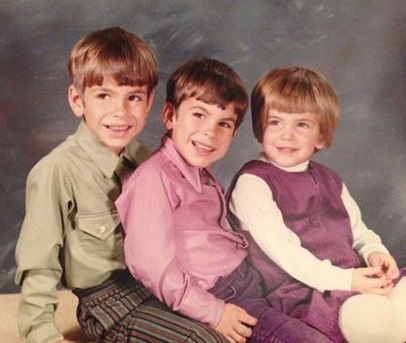
Image


(Above: I couldn’t resist putting out a Belated Siblings Day post on Facebook with this sweet Combes sibling portrait from the early ‘70s.)

Here’s what Wikipedia says: “Siblings Day (sometimes called National Siblings Day) is a holiday recognized annually in some parts of the United States on April 10 honoring the relationships of siblings. Unlike Mother’s Day and Father’s Day, it is not federally recognized, though the Siblings Day Foundation is working to change this. Since 1998, the governors of (41) states have officially issued proclamations to recognize Siblings Day in their state.”

There’s a lot more information about it in this fact sheet located on the foundation’s website. For example, the date of April 10th was picked because it was the birthdate of the founder’s deceased sister.

That, as the website says, “the bond between siblings is usually the longest relationship of a person’s life” is certainly true. I remember pointing this out to my nephew Liam a year or two ago when he was angsting about his sister and yelled at the top of his lungs, “I hate Ayla!!!” I counseled him then that the day will come when he needs his sister and that his relationship with her will be the single-most important one he develops through his whole life. Of course, he looked at me like I had corn growing out of my ears.

I certainly had my ups and downs with my two brothers, Bill and Wayne, particularly when we were very young.  I remember being terrified of being left alone with Wayne and often used to wonder, had Billy not been there to protect me from him, whether I ever would have survived toddlerhood.

There was the time Wayne pushed my head under water while I was learning how to swim, the time he got a bunch of neighborhood kids to help him stick me in a hammock and spin me over and over again until I threw up, and the countless times he used to kick me under the table.

Wayne never minded getting in trouble, so he seemed to make it his goal to take me down with him. “Wayne is kicking me under the table!” I once yelled.  Dad replied in a millisecond, “at least he’s quiet about it.”

The most depressing instance was the time Wayne successfully got my mother to believe that I had used the F word.  I was probably 8 at the time and I had never even considered using the F word. I’ll never understand, given Wayne’s history of shenanigans, why my mother believed him. At any rate, Mom attempted to wash my mouth out with soap – except there wasn’t any water involved. I can still taste the chunks of Coast that were scraped off in my mouth under my little buck teeth.

It went on like this for years between me and Wayne.  Our relationship didn’t turn around until Billy went to college and it was just the two of us left at home, he a high school senior and I a junior. Wayne had realized that it was handy to have a popular sister who could potentially provide access to girls.

In my “new” relationship with Wayne, I was touched that he asked my help putting clothes together for him to wear to school. He seemed to blossom in several ways that last year home.  In actuality, I probably just noticed Wayne more now that Billy was gone. That allowed me to get to know him better and to appreciate him. 

Billy and I, on the other hand, seemed to have been made from the same mold.  We were high academic achievers, extroverts, and captains of our high school sports teams. That we were so much alike and so difficult to ignore were probably the main reasons Wayne seemed to have so much trouble growing up. He might have felt unnoticed and under-appreciated, and that led to outlandish behavior to get attention.

In high school, Billy and I had a nightly ritual of doing homework around the massive oak table in our family room. It was always a race to finish our assignments by 11:15, when the local NBC news broadcast ended, so we could watch “Star Trek.”  When the mildly attractive and shapely meteorologist started her fumbling assessment of the next day’s weather, it was a signal to finish up, close the books, and be alert for Captain Kirk.

Like the motley crew on the Enterprise, Billy and I always seemed to get along.  Those nights doing our homework together are among my fondest childhood memories.

Then the inevitable happened. We all grew up and went our separate ways. Bill was off to Clarkson University in upper state New York and then into the nuclear core of the U.S. Navy, where he remains today, presently out to sea with the rank of Captain. Wayne found college life wasn’t for him and joined the U.S. Air Force where he had a very long and decorated career. He’s retired from the military, but is back at the Wright Patterson base in Dayton, Ohio, as a civil servant. I went around the world in my studies and early career, ultimately settling back home in Vermont, just a stone’s throw from where the three of us grew up.

All of this sibling talk is making me realize that we really need to make a point of getting together much more often. I’ve no opinion on whether or not there should be a national holiday to celebrate siblings. It all seems a bit too Hallmark-ish for me.  However, I am very thankful to have taken this time to reflect on my relationship with my two brothers. And I’m pretty darned lucky to be stuck with them. 

From the Mailbag 2

Standard

Image

How’s It Going? And, By the Way, What’s a Blog?
The other day, my neighbor asked me: “How’s it going, now that you’re a quarter of the way through?” He was, of course, asking about my resolution not to drink alcohol this year. “Aren’t you following my blog?” I asked in return. “What’s a blog?” he replied.

If you knew my neighbor, you wouldn’t be at all surprised to hear that he didn’t know what a blog was.  After all, his pickup truck is vintage 1980s.  What was surprising, however, was that I had trouble coherently and succinctly summing up how I feel about my resolution thus far. What stumped me is that I didn’t have any expectations going into this. I had made the decision to do it on extremely short notice and just jumped in head first with the resolution and the blog, all at once.

After not making sense for a few seconds, I went into the details about my weight loss so far, my running goals, and so on.  My neighbor interrupted and offered: “So, it’s been positive?” I had no hesitation, saying: “Yes. Yes. Absolutely. It’s very positive. I’m at the point where I’m not sure I will drink again when 2015 rolls around.”

Wow. I didn’t see that coming. Did you?  So, for the curious who’ve asked, here are some other Q’s and A’s related to this project:

How Much Was the Weight Loss From Not Drinking vs. Other Reasons?
The first 8 pounds I lost was solely from not drinking. In the beginning, I purposefully did not want to change anything else, including my diet or exercise routine. Without a purposeful diet, I would not have lost any additional weight.

I lost another 8 pounds (and counting) by sticking maniacally to a daily calorie goal that I track in an app called MyFitnessPal. My daily goal of 1,200 calories allows me to lose 1-1.5 pounds per week.  I input everything I eat into the app. When I exercise, I also input that into that app and earn more calories for that day. If I eat too much, I exercise more.  It’s that simple.  Despite the simplicity, it can be very difficult to be completely honest with yourself about how much you have eaten. But if you honestly use the app every day, it will work.

Not drinking is the single-most important factor in my weight loss, for several reasons. Taking those empty calories off the table has made a tremendous difference. In the past, one glass of wine could lead to another glass and that could lead to eating things I didn’t need to eat. Also, I am now able to exercise at night, something I never could have done after drinking wine at dinner.

What Are the Unexpected Benefits From Not Drinking?
This is a great question.  From a general health standpoint, what I noticed within days is that I was getting better quality sleep and was sleeping through the night much more often than before.  Over time, I also started to feel more mentally alert and more confident. Because not drinking has led to losing weight and allowed more time for reading and writing, I also feel happier and more balanced.

Have You Experienced Clearer Thinking?
Yes. Definitely. It is particularly acute when I am around other people who are drinking. It’s a strange sensation of being very present and keenly aware of what is going on.

What’s Up With that Ideal Weight Calculator?
In my last post, I talked about so-called “ideal weight” and used this calculator to confirm that my weight loss goal was realistic. I received feedback from several guys, all of whom felt the calculator was off for them and seem to be reporting unrealistically low weights. One of them even said it reported his weight from 8th grade as ideal! A few of these guys are very muscular. Therefore, I’d like to recommend that they focus on percentage of body fat, rather than weight. Here’s info from Livestrong about that and here’s a body fat calculator.

Also, I want to caution that research indicates women tend to under-estimate their ideal weight, while men tend to over-estimate it.

Regular followers of my blog may recall that my first “From the Mailbag” post answered several other questions back in late February, including “why did you really start this blog?” Check it out if you haven’t already.

And, please keep the questions coming. I promise to answer each and every one.

Ideal Weight?

Standard

People are starting to notice that I’ve lost weight. Judging by their reactions, the first 10 pounds disappeared without much fanfare, but it was the next five that seemed more apparent to everyone, including me. That’s pretty much how the process went too:  10 pounds were relatively easy to lose and the last five took much more commitment and focus.  And I have five more to go.

One of my friends who hadn’t seen me in a while said the other day: “Wow! You look great! Don’t lose anymore.” Although that’s a positive reaction and one that I was initially happy to hear. The “don’t lose anymore” bit has been stuck in my craw. I’ll tell you why.

I think I am a pretty good judge of my own weight and that my goal of losing 20 pounds is realistic and healthy. When I topped out at 165 pounds, I was clearly overweight. And, when I began this year at 158 pounds, it was evident that I still had quite a bit of weight to lose.  Photos confirm this, as did the many tight or impossible-to-wear clothes in my closet.

Image


(Above: Me with Karl Roemer, my high school soccer coach, last summer. I weighed 155 pounds at the time.)

My whole life, I’ve heard things like “You have those soccer legs” or “You have a big frame and carry weight well” and the like. Actually, I don’t have a big frame.  I have a medium to small frame, something I just confirmed by consulting several websites. The first suggested that I take my fingers on my right hand and wrap them around my left wrist. Since I can go all the way around and then some that indicates a small to medium frame.  This other website claims that the best way is to actually measure your wrist. My wrist is 6.25 inches around, also indicating that I have a small to medium frame. 

I’m talking about my body frame, because that is one of the key inputs that helps to establish “ideal weight.” Reflecting back on my weight through the years, I consider 135 pounds to be ideal.  And, as you know, my goal this year is to weigh 138. Because of my friend’s comment, I took some time to confirm that my goal is reasonable.

After my sophomore year of college, I went on a serious diet for the first time, in order to lose what I had gained resulting from the combination of a serious soccer injury and typical college drinking. Before that diet, I weighed about 160 pounds. I lost the weight and swore I would never weigh over 140 pounds again.  I kept that promise until things went a little wacky after being treated for a serious thyroid disease about 12 years ago.

Fast forwarding to today, I now weigh 143. Losing 5 additional pounds would put me at my goal of 138. Even though I know through experience that it is a good weight for me, I did research on “my ideal weight.” That’s how I found this nifty Ideal Weight Calculator.  

Self-described this way: “The Ideal Weight Calculator computes the ideal body weight as well as a healthy body weight range based on height, gender, and age. People have pursued an ideal weight formula for centuries, and hundreds of formulas and tables have been created. However, there is still no definite answer regarding the ‘best’ weight for a person. However, the results obtained by most formulas are very good. The Ideal Weight Calculator provides the results of all the popular formulas for comparison purposes.”

Image

(Above: My results using the “Ideal Weight Calculator”)

When I plug in my age, gender and height, these four methods of determining ideal weight come up with a very small range of between 134 and 138 pounds. And, very interestingly, this other website uses a database of survey responses to indicate an ideal weight. Halls, M.D. believes that ”almost all ‘ideal body weight’ websites use obsolete formulas or tables created in 1979 or earlier” and that his page tells “what people just like you think about their ideal weight.” Guess what? People just like me evidently think their ideal weight is 136, which happens to be right in between the range indicated by all of those “obsolete formulas.”
At any rate, I’m pleased that this exercise confirmed what I already knew to be true. Not only is my goal of weighing 138 pounds realistic, it is very close to my ideal weight. It may not be easy to lose these last 5 pounds, but at least I’m not crazy or unhealthy for trying.

Boston Strong

Standard

It was almost exactly a year ago that I heard the first live reports of the Boston Marathon bombing on the radio, while I was driving to a business meeting. Tears immediately welled up in my eyes, when I thought of marathon runners so close to the finish line being cut down in their tracks, unable to finish. And, in watching the televised coverage, I remember relating to the 78 year-old runner who was helped across the finish line right after the bomb went off. I think any runner would say that finishing the race would be a higher personal priority at that moment than worrying about your own injuries. Within 24 hours of the bombing, I knew that I was going to try my best to make it to Boston this year. 

Unfortunately, Plan A of trying to qualify for Boston — or “BQ” as we runners call it — based on my marathon running time didn’t pan out. Although I ran several half marathons and trained quite heavily, it was pretty apparent by late summer that I simply wasn’t capable of running a marathon in less than three hours and 55 minutes. Although I continued training, I also put a lot of effort into Plan B, which was to get to the Boston Marathon with a charity racing team. 

Due to the overwhelming response to the bombing from runners around the world, I wasn’t able to make it onto the charity team I selected either. It was devastating to get an email from the Dana-Farber Marathon Challenge that read: “We sincerely regret that we are not able to provide you a Boston ’14 marathon entry.  As much as we would like to accept every applicant, that is simply not possible due to truly overwhelming demand.  Thank you for your patience and understanding throughout this unprecedented situation.”

Why am I telling you this story? Because, I just revived my dream of running the Boston Marathon. Here’s how it happened.

Two months ago, I revealed my two tag-along New Year’s resolutions of losing 20 pounds and running my fastest marathon — called a “PR” for “personal record.” I decided to focus on my diet over the months of February and March, in hopes of losing 15 pounds by that time. The weight loss was expected to help me run faster, when I started by marathon training in April.

When I shared my Quarterly Report post earlier this week on Facebook, something in it caught the eye of my good friend, Lisa.  I should probably explain that Lisa is a REAL marathon runner. She’s in the midst of running her third set of marathons in all 50 states. What Lisa noticed is that I ran my first long-distance race of the season at a 9-minute per mile pace, which is a full minute and a half faster than my pace during my first race last year.  Since Lisa and I already had plans to run the Around the Lake Marathon on my birthday in late July, she suggested that I tweak my goal. Now, with Lisa’s encouragement, instead of just trying to PR at that race, we’re both going to try to BQ!

My best marathon time was at the Rock ‘n’ Roll Marathon in Phoenix, back in January, 2006. I ran that in just over four-and-a-half hours.  As I mentioned above, my BQ time is less than four hours. That means I have to cut a half hour off my best time to qualify for Boston.

Image

(My official race photo when I got my PR at the P.F. Chang’s Rock ‘n’ Roll Marathon in Phoenix, in January, 2006.)

I’ve started using the Hal Higdon Marathon Intermediate 2 Training Program which is an 18 week program that starts out with a 10-miler on the weekly Sunday long run. It also features three training runs of 20 miles prior to the marathon and strong Saturday runs to achieve a little fatigue during the weekly long runs.  This is more aggressive than the Hal Higdon training plans that I have used in the past. Looking at the races in my area, I adapted Hal’s plan by fitting in some competitive distance runs before my BQ try on July 25th.

It’s my hope that more serious training, combined with my weight loss and increase in overall fitness from not drinking, is going to make a real difference in my marathon performance. This is not going to be easy. But, I’m game to give it one heck of a try.

Image

(My modification of the “Hal Higdon Intermediate 2 Marathon Training Plan” with race schedule.)

Quarterly Report

Standard

This is the first quarter status report on my dry year.  Believe it or not, three months have come and gone since I quit drinking as my New Year’s resolution, and started this blog to share my thoughts about that and other things. To be perfectly honest, I’m completely over the whole not drinking thing. By that, I don’t mean that I want to start drinking again. What I mean is that not drinking alcohol has become so ingrained in me that I just don’t think about it very much. And that’s making it difficult to find things to write about.

At the end of my first month, I reported that I had lost six pounds simply by not drinking, and that I was dismayed that forming a new habit was going to take a lot longer than I had expected. Then, at the end of my second month, I realized that my old habit of drinking wine every night had disappeared unnoticed, and I was 11 pounds lighter. In between those two posts, I revealed that a big motivator for embarking on my “dry year” was my belief that alcohol was preventing me from losing the 20+ pounds I had gained over the past several years, as well as from being a more competitive runner.

In chunking out my planning and goals into more manageable bits, I decided not to change anything else about my eating or fitness routine in January. And, in February and March, to focus on my diet first, mainly by using MyFitnessPal to track everything I eat, as well as my exercise. I hoped to lose 15 of my goal of 20 pounds by that time. My plan was to then pivot from my diet to my running and race training in April, and to try for my personal best marathon time on my 46th birthday in late July. Assuming all goes accordingly, I would still have five months to complete my diet goal before the end of the year.

Even though there’s still snow on the ground here in Vermont, March is over. The inevitable question is: How am I doing? Drum roll please…..

I lost 15 pounds! I’m particularly proud of that, because I was on vacation the first two weeks of March. In just 90 days, my Body Mass Index dropped from 24.7 to 22.4. According to the U.S. Navy body fat calculator, my percentage of body fat dropped from 27% in mid-February to 24% today. I’m not quite in the “fit” category yet, so there’s more work to do. However, I’m really getting close to my ideal weight and fitness level, and feel very happy with my results.

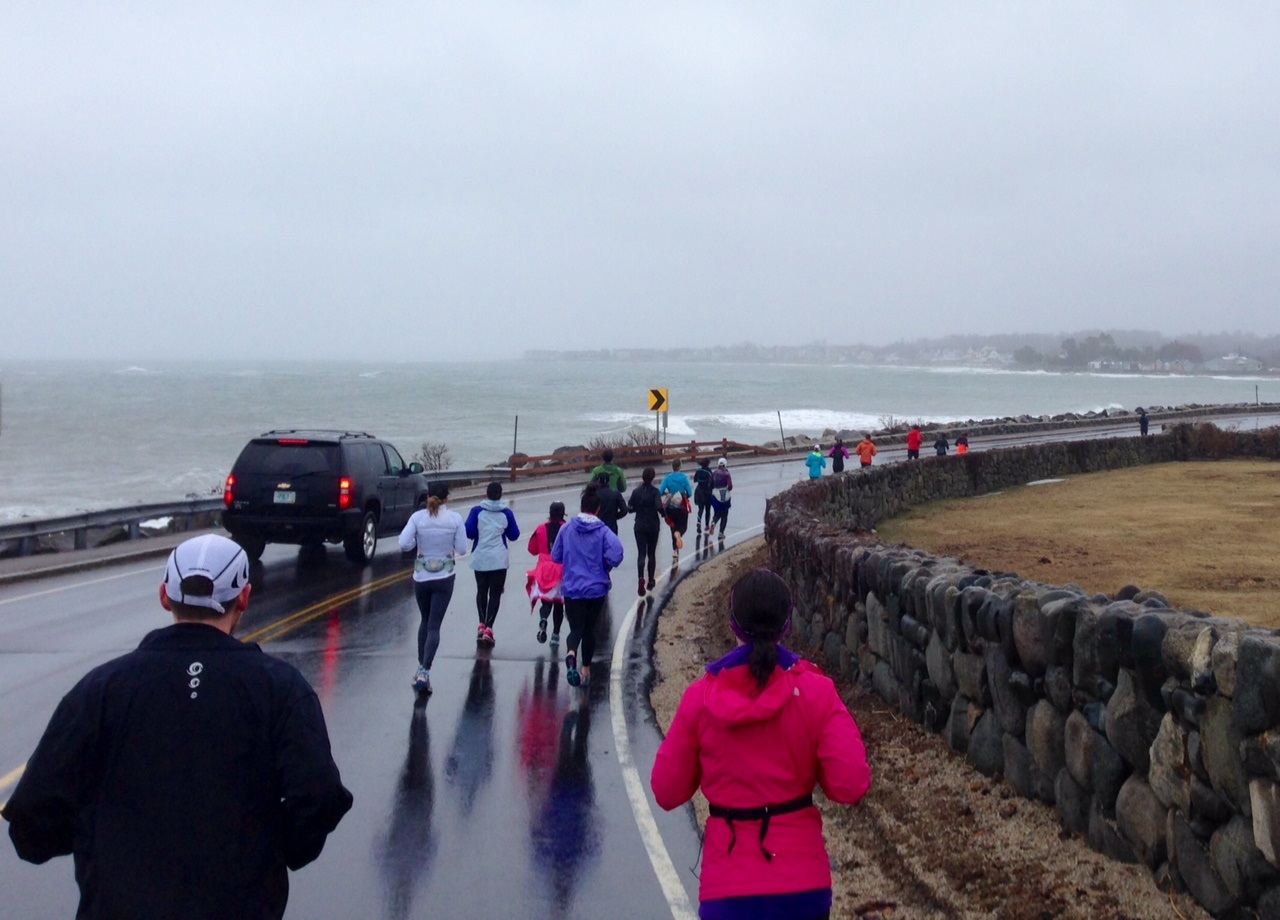
So far, my theory that losing weight will make me run faster appears to be correct. I took part in the Run for the Border Half Marathon on the New Hampshire coast this past Sunday.  It was raining, windy and cold – I got hit by foam and sea water from waves that crashed against the seawall and sprayed onto the race route! Because of the crazy weather and coastal flood warnings, the race was shortened to 10.19 miles. I surprised myself by racing at a 9:02 per-mile pace, much faster than expected. Last year’s half marathon results were all slower than this, ranging from a 10:27 per-mile pace in Middlebury in May, to a 9:20 pace down in Manchester, Vermont, in early September. I felt very comfortable the whole race and definitely had more in the tank when I crossed the finish line.

Image

(My vantage point running the Run for the Border Half Marathon in coastal New Hampshire on March 30, 2014.)

Over the past three months, the most important thing is that I had decided to reward myself early with a trip to Laos. Since I was saving well over $4,000 this year by not drinking, and it was burning a hole in my pocket, I deserved a big reward for all of my efforts. My 10-day trip was unforgettable and under budget — around $2,500. Later this year, when I reach all of the other goals I’ve outlined, maybe Bruce and I will take another trip together to celebrate.

My Vacation in Haiku

Standard

It’s been one of those weeks when I’ve thought of several blog topics. Yet, nothing really gelled into anything coherent enough.  Since I’m still getting lots of positive feedback about my posts on Laos, particularly about my iPhone photography, I’ve settled on the easiest post of all: my vacation haiku interspersed with photos.

Most of these were written on the flight(s) back home, motivated by my disappointment that I had been on vacation for 10 days and hadn’t written a single poem to commemorate the journey.

I was traveling to visit my step-daughter and her friend, two professionals in their 20’s who wisely and boldly took a four-month sabbatical to enjoy life and create new experiences.  Fittingly, I took my trip to join them with a friend of my own from college, Angela Casey, with whom I had spent time in several Asian countries 20 years ago. Twenty years? Say it isn’t so!

The first haiku is about youth and how many experiences seem wasted on them. Of course, the motivation for this poem isn’t about Erin and Abby. It’s driven by my recent discovery of my old journals as I prepared to write my memoir, and, likewise, having thumbed through more than a thousand travel photos prior to Angela’s first visit here to Vermont to plan this trip.

“Regret” is wisdom
Condemning youth for missing
The signs. Damned hindsight!

Image
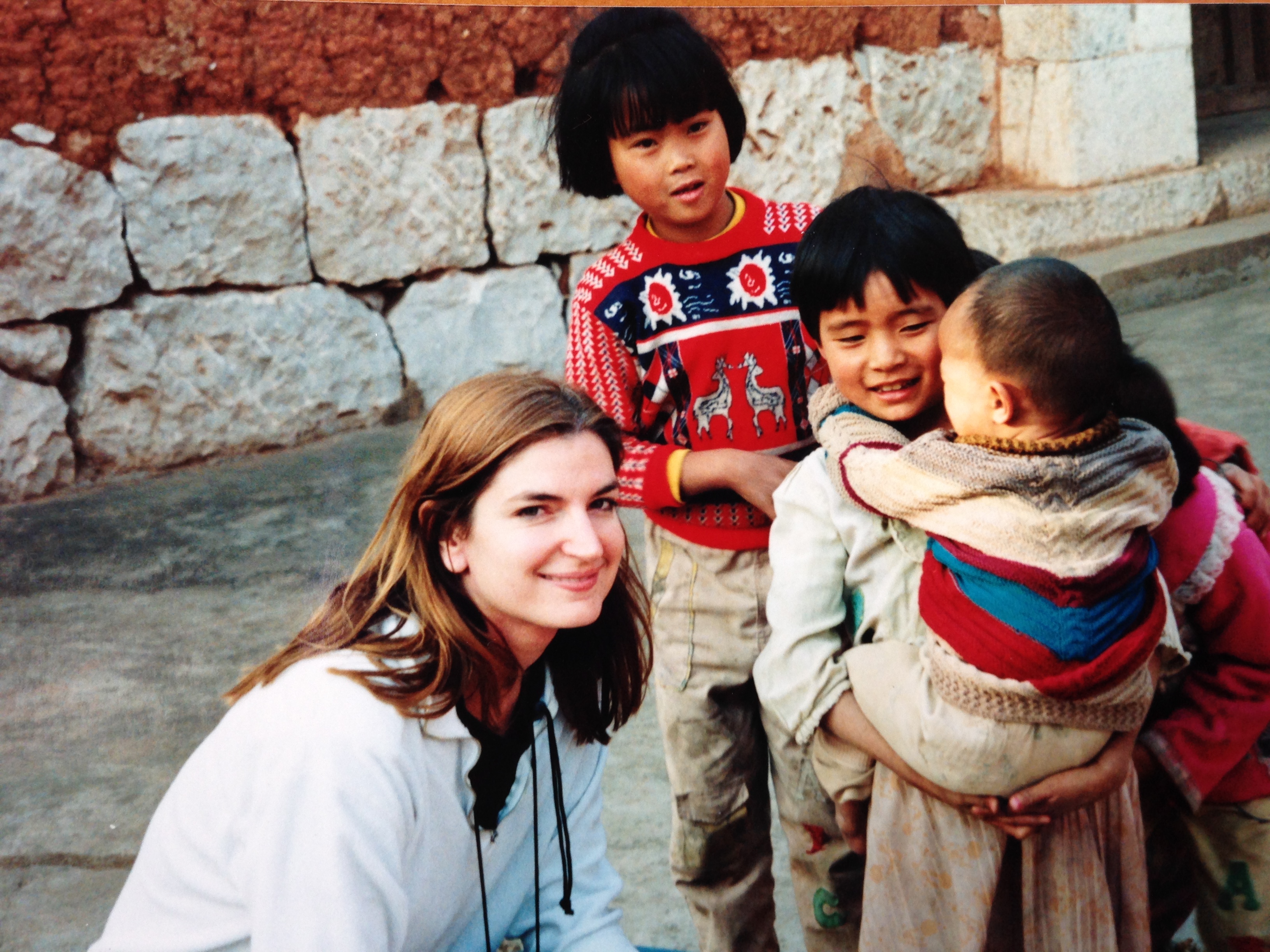
(Above: Me in rural southern China in 1997. Below: Me and Ange at the Raffles Hotel in Singapore in April 1995.)
Image
The next one is about my return with Angela to Beijing after so much time. Some of my feelings and opinions developed during the course of my nearly three years as an ex-pat in Beijing were chronicled in this post a month ago.

Beijing, have you changed?
Wi-Fi. Starbuck’s. House of Cards.
Emperor’s new clothes.

Image

(Above: Ange and me in a Beijing hotel lobby in 1994. Below: The two of us on Tian’anmen Square a few weeks ago.)

Image


Image

(Above and below: After nearly 20 years, Beijing was different and the same, all at the same time.)

Image

Most of our trip was spent in Luang Prabang, Laos. This ancient capital and former French colony is situated along the Mekong River and is still home to dozens of active and well-preserved Buddhist temples. None of the four of us had been to Laos before, so we were all discovering new things. Every day was packed with enough bold color and interesting experiences to last a lifetime.

Many of the subjects that formed these haiku were also described in earlier blog posts. And, certainly, also caught in pictures. If you are interested in finding out more about the topics of these poems, be sure to use the links to get more info.

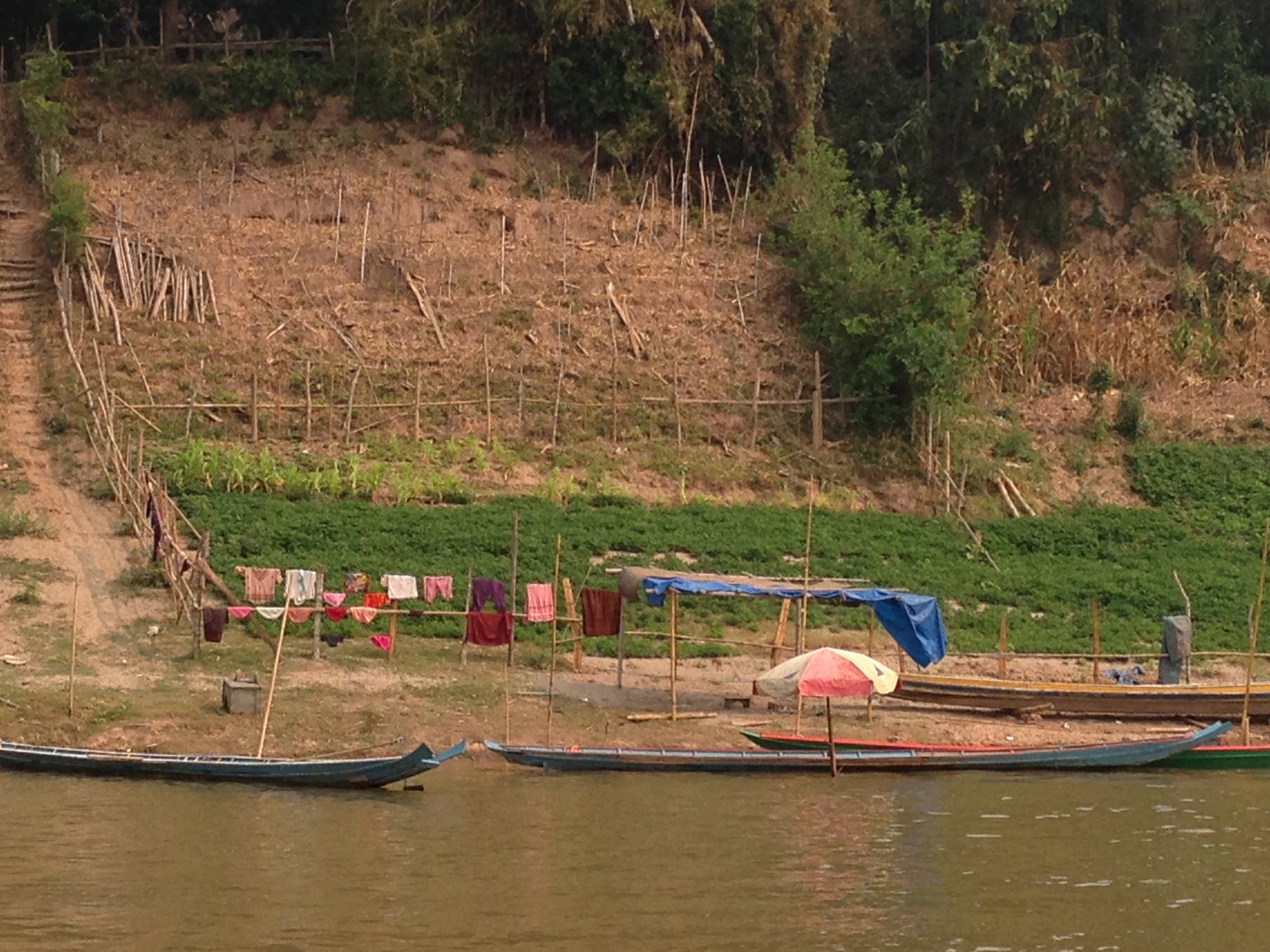
Along the Mekong,
Bold color and bounty spring
From the river banks.

Image

(Above: Despite the “dry season”, the Mekong banks were alive with crops and boats. Below: Members of a family that farms eggplant along the river. They graciously let us to use their lean-to for our lunch-time break from kayaking.)

Image

Morning market throng
Fruits, spices, meats of all hues,
Dizzy the senses.

Image

(Above: Spices at the Luang Prabang morning market. Below: Just a small section of the market.)

Image

Each temple yard yields
Countless monks by sunrise to
Walk tourist-lined streets.

Image

(Above and below: Different perspectives of the “tak bat” or morning alms-giving, a daily ritual at sunrise in Luang Prabang’s historic downtown.)

Image

Blazing orange robes
Catch sunbeams between the trees
To clothe patient monks.

Image

Image

Fearful ride atop
Elegant, beautiful “beast.”
Wild elephant ride.

Image

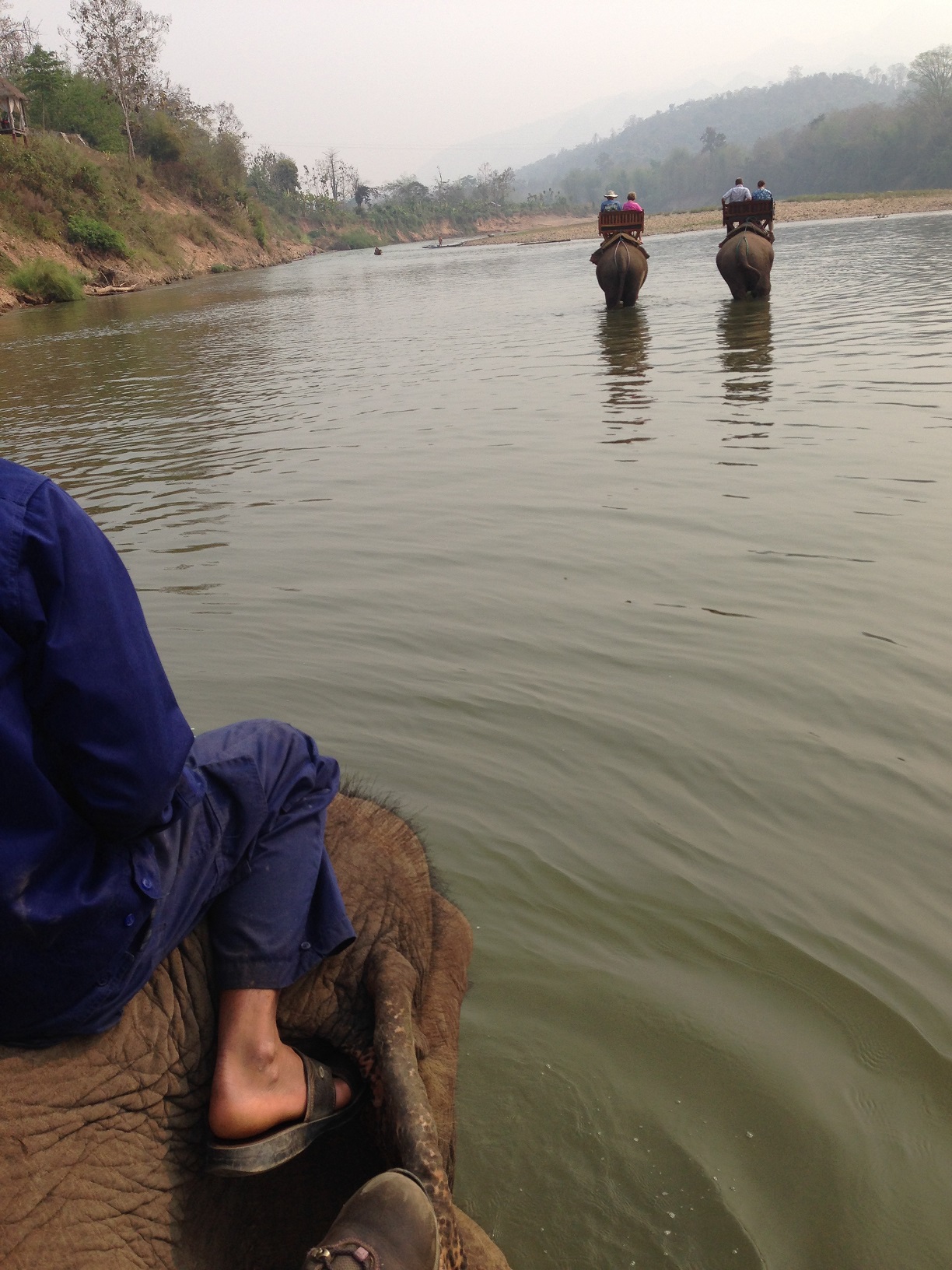
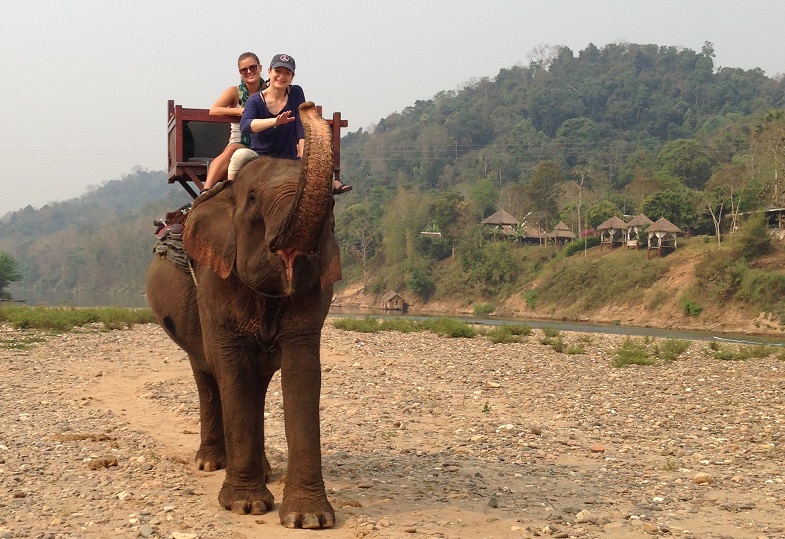
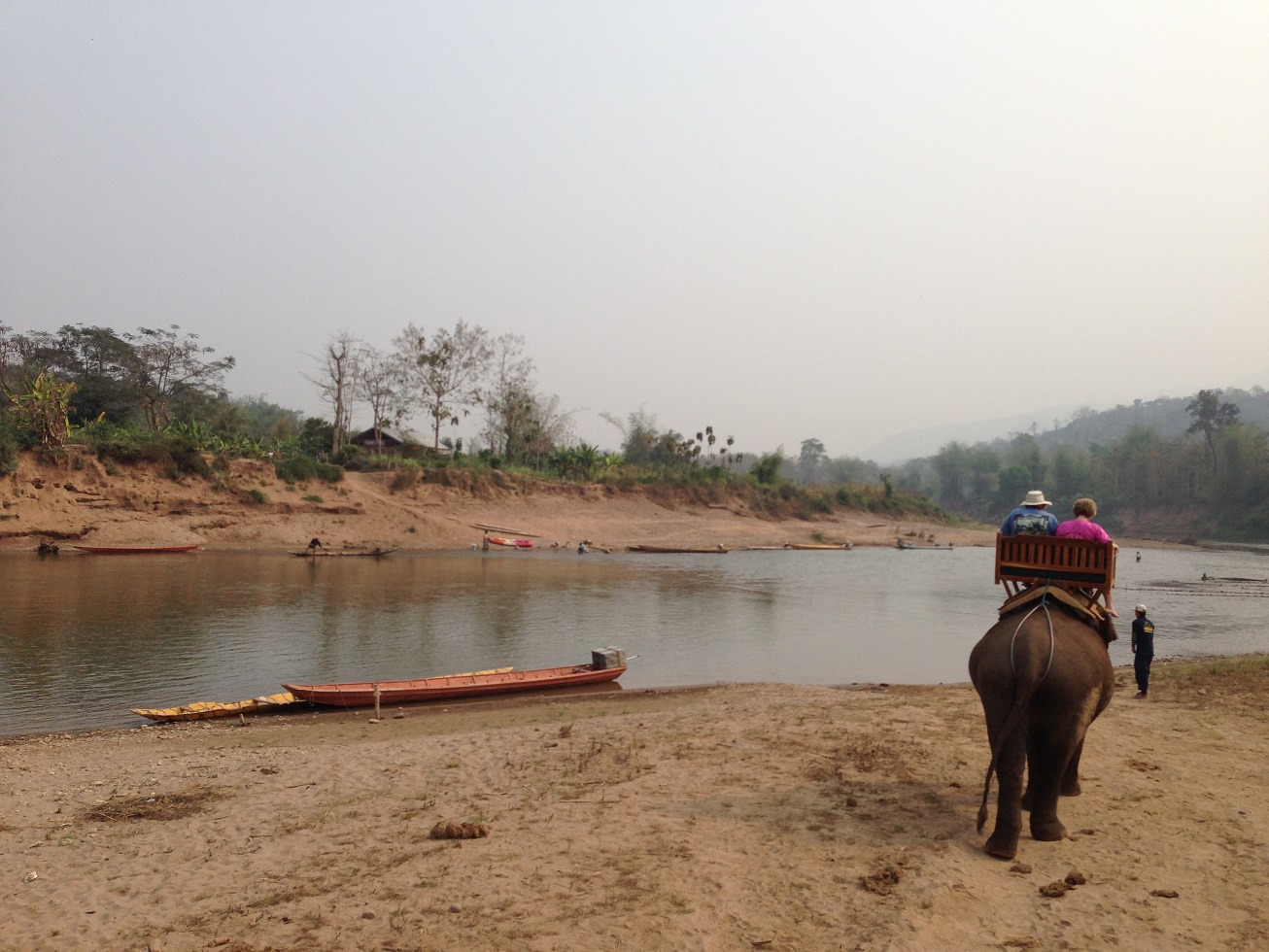
(Above: My view from atop the elephant as we headed into the river at Elephant Village. Below: Our guide’s photo of me and Erin, after I moved from the seat to the elephant’s head.)

Image

With the months of preparation and research that went into the trip, including a reunion with Angela and a series of planning sessions, not to mention the work and household planning to accommodate it, it’s amazing how quickly the trip arrived and then was gone. With all of the unforgettable experiences that comprise the journey, there’s still nothing like coming back home to Vermont again.

There and back again.
Like Bilbo’s long adventure,
Nowhere else like home.

Image

A Wild Elephant Ride

Standard

Image

I’ve been back from Laos for exactly a week. The most common question I’m asked is: “What was the best part of your trip?” That’s a terribly difficult question to answer. There are at least 10 different answers, ranging from spending time with my step-daughter, to reconnecting with my old college friend, to traveling through rural Asia for the first time in over 16 years, to returning to my old stomping grounds — Beijing, to creating many unique memories in Luang Prabang, some of which I have already discussed on this blog. Here, I answer this question very narrowly.

I’ve already written about the Mekong River, Laotian food, and the impressive Buddhist influences in Luang Prabang. These are memorable parts of my trip that I will not soon forget. However, if I had to choose just one day among the 10 of my vacation to remember and cherish forever, it would be the one spent at the Elephant Village, an elephant sanctuary and tourist destination dedicated to the protection and rehabilitation of Laotian elephants.

Image

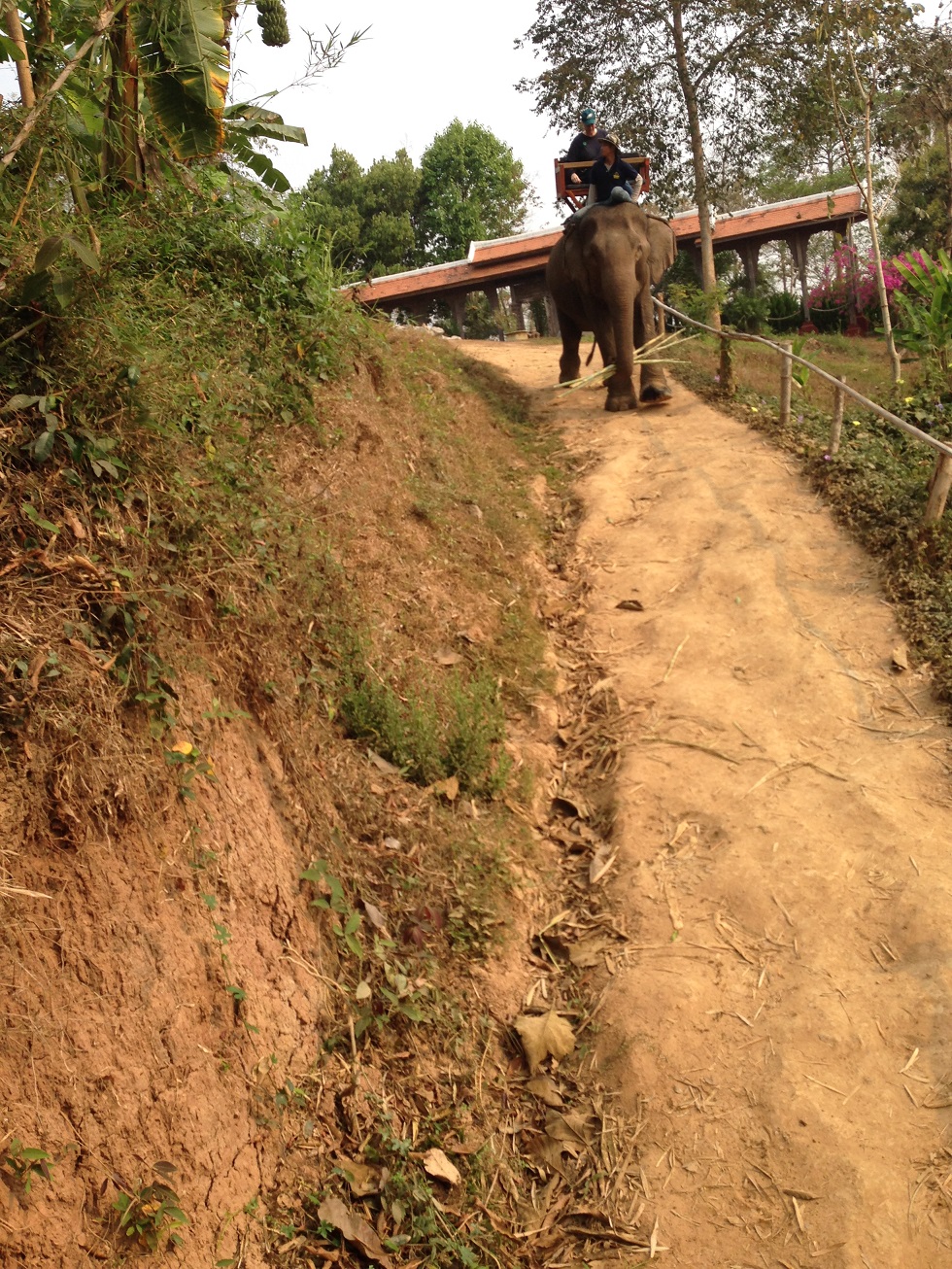
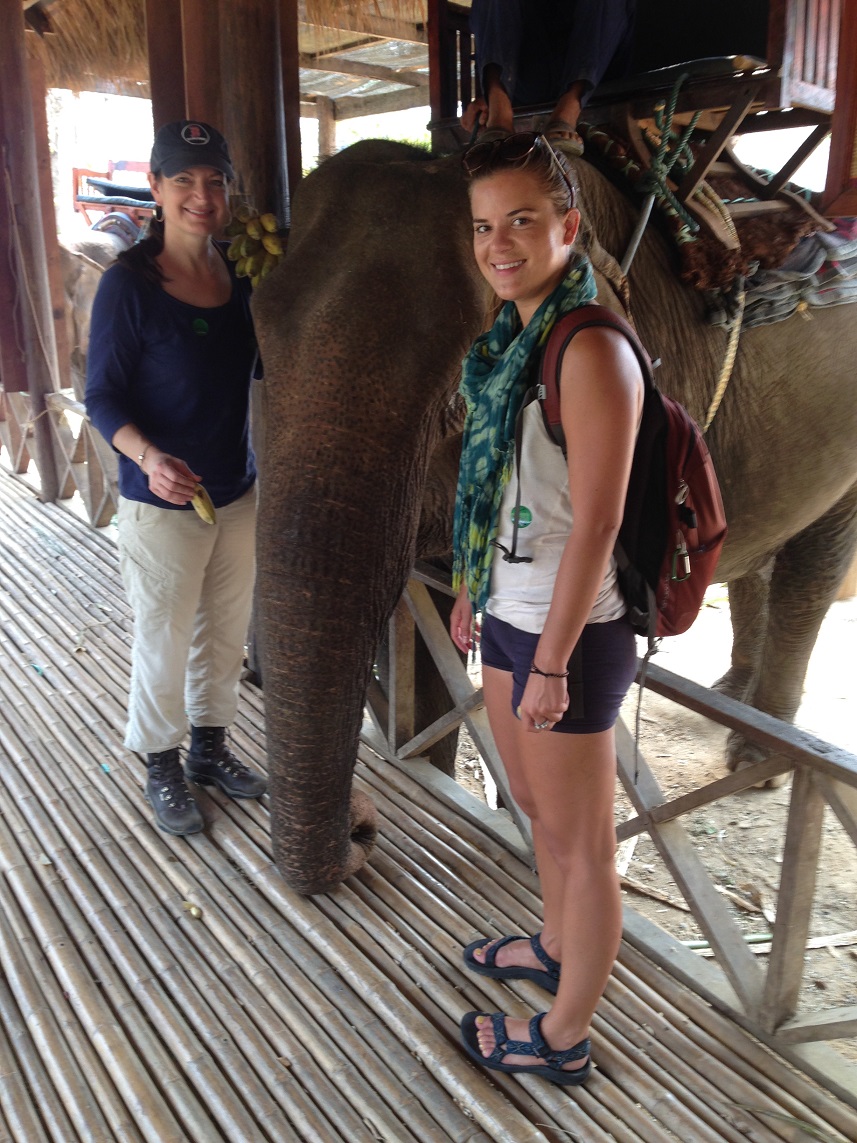
It’s difficult to impart the unique combination of exhilaration and fear that I felt riding on Mae San, a 35-year-old rescued elephant (read her story here).  Erin and I started out the hour-long ride on the bench atop the elephant — we had to mount by climbing up a platform and then jump onto the 10-foot tall animal! After a brief walk on level ground, Mae San, under the guidance of a Mr. Pan, purposefully headed downhill toward the river. We knew then that we weren’t in Kansas anymore, each wrapping both arms around the bench, holding on for dear life during the descent.

Image

Shortly after crossing the river, our guide jumped off and asked if one of us wanted to sit directly on Mae San. I turned to Erin who wildly shook her head “No!” So…I volunteered. To call it a “mistake” would indicate that I wouldn’t do it again if asked. I am truly glad I did it. It was amazing, terrifying, and wonderful, all at the same time. Had I known that I would be scared for my life nonstop for 40 minutes, that my quads would shake and pound uncontrollably for at least half of that time, or that the wiry hairs on Mae San’s head would feel like coarse sand paper filing the skin off my ankles ahead of time, I might have responded to the question exactly as Erin had. As it turned out, I am very glad that I was both blissfully ignorant and naively brave when the question was asked.

With the above said, I’ll let the photos that Mr. Pan and I took of this experience speak for themselves.

Image

Image

Image

Image

Elephants have a long history in Laos and the current situation for the animal there is dire.  As I mentioned in my last post, the original name for much of what is now Laos (including the entire Luang Prabang region) was Lan Xang, which means “one million elephants.” The name indicates how prolific elephants used to be in the area. Today in Laos there are less than 600 elephants in the wild and just over 400 domesticated ones. Read more here.

Why have they essentially disappeared? Of course, many elephants fell victim to the ivory trade.  More info can be found here and here. And, many others were over-worked in the logging industry. Because female elephants are easier to domesticate, elephant cows did nearly all of this logging work. Under the stress of hard work, most became unable to reproduce. The Laos government reports that only 33 of the country’s elephant cows are under the age of 20 and thus safely able to reproduce.

After our exhilarating elephant ride, before our afternoon of kayaking, we boated up the river to see some nearby waterfalls. We were extremely fortunate on our way back down river to catch a glimpse of “Maxi”, a rare male elephant born at the Elephant Village last May.  Maxi is expected to have an important role in repopulating his species. Fortunately, the sanctuary we visited is just one among many organizations dedicated to protecting and repopulating elephants in Laos and neighboring countries.

Needless to say, visiting Elephant Village and riding Mae San are experiences I will never forget.

Land of Golden Buddha

Standard

Image

Even though I am now safely and happily back home in Vermont, there are a few topics related to my recent trip to Luang Prabang, Laos I’m still researching.  One of them is the prevalence of Buddhist temples and monks there. Of all of the items I posted on Facebook during my trip, the photos of monks in saffron colored robes were the most “liked.”

It turns out that the city of Luang Prabang gets its very name from Buddhism. Luang means “land” and “phra bang” means “golden Buddha” in Lao. It was changed to this name more than 300 years ago, after Cambodia gave a gold statue of the Buddha as a gift to the city. At that time, the city was the center of Buddhism for the entire region.

According to a Luang Prabang legend mentioned here by USESCO, “the Buddha smiled when he rested here for a day during his travels, prophesying that it would one day be the site of a rich and powerful capital city.” In case you’re wondering how they knew Buddha had stopped by, one of the temples built into the mountainside has Buddha’s footprint on display!

Image

The type of Buddhism in Laos is unique. It is an offshoot of the Theravāda Buddhist tradition which is the oldest Buddhist branch and considered to be the most conservative. There are over 150 million followers worldwide of the Theravāda Buddhist branch.

In Laos, however, Buddhist beliefs are intertwined with native Animism.  One prevalent element of Animism is the idea that there are spirits that influence health and prosperity. Many of the offerings the Lao make at Buddhist temples are accompanied by requests to these spirits to make a positive influence in their lives or to reverse something negative. There are Buddhist statues of countless varieties, each with a different meaning.

Image

Image

It is estimated that 65% of the Lao population is Buddhist.  And, when you take into consideration the Animism component, closer to 90% of the population are “nominal adherents of both Buddhism-Animism” (more info is here).

Shortly after our arrival in Luang Prabang, I was so excited to capture this photo of two monks walking down the street in front of our guest house, thinking that it was a rare sight:

Image

Little did I know that monks are quite literally everywhere in Luang Prabang. There are 32 Buddhist temples and more than 1,000 monks that serve the city. Because of the UNESCO World Heritage Site status, the temples are in excellent condition and most have already been restored to their original condition.

Image

Image

Image

Image


Perhaps the most incredible experience from my entire trip was the morning I took part in the procession of the monks. Called “tak bat” or morning alms-giving, all of the monks that serve the local temples leave their temples before 6am and walk through the main streets to receive alms from the devout who line the street.

According to an article on About.com by Michael Aquino: “The ritual is done in silence; the almsgivers do not speak, nor do the monks. The monks walk in meditation, and the almsgivers reciprocate with respect by not disturbing the monk’s meditative peace. For hundreds of years, the ritual has cemented the symbiotic relationship between the monks and the almsgivers who maintain them – by feeding the monks and helping the laypeople make merit, tak bat supports both the monks (who need the food) and the almsgivers (who need spiritual redemption).”

Due to jet lag, I was awake every morning before sunrise. Therefore, walking the 3 blocks from our guest house to watch the procession was a no-brainer. Before I was even able to register that I was in the right location, I came under the powers of an authoritative and industrious local woman who directed me to take off my shoes, sit cross-legged on a mat, and pay 50,000 kip ($6.25) for sticky rice and crackers to give the monks.

Image

Image

After giving alms to three groups of monks, I was out of food and decided to put my shoes back on and take photos of the rest of the procession.  Within half an hour, I had seen at least 10 groups of monks stream past, with no end in sight.  Satisfied that I had both observed and taken part in something really special, I sauntered off in the direction of our guest house, in search of a strong cup of Laotian coffee.

Image

Image

Image

Doing research for this post, I discovered that the original name for the entire Luang Prabang region was Lan Xang, which means “one million elephants.”  That is probably going to be my next topic. Stay tuned. 

Image