How CNN Changed My Life

Standard

CNN Press Pass

Some of you asked to know more about the “Throwback Thursday” photo of my CNN press pass (pictured above). Although my two-week stint with CNN seemed a mere blip on the screen, it completely changed my life.

After graduate school, I moved to Singapore as a newly-wed in January 1994. The following spring my husband’s job transferred to Beijing. I joined him there after a brief vacation to visit my family in the U.S. I arrived in China that April inexplicably obsessed with the O.J. Simpson trial, having read an old People Magazine on the return flight. How had I not heard about the sensational trial and all of the hoopla surrounding it?

Rather than settling in smoothly as I had always done before, I felt isolated and wrestled with my sense of self. Very quickly, I became depressed. My journals from this time show how CNN became a symptom of my depression and, incredibly, the cure of it, just three months later.

China Journals

(Above: One of my journals open an entry about my work with CNN in Beijing in 1995.)

A journal entry from June 8, 1995 is below:

It’s so lame that I have all of this free time right now, yet I can’t seem to get myself to do anything with it. For someone with so many dreams and ‘goals,’ it’s bizarre that I am completely incapable of following through with even just one of them. I sent that fax to CNN, but I’m sure in my mind that they won’t call. I know I need to get fluent in Chinese, yet I stay at home all day and don’t even try to read the local papers or listen to the local newscasts. It’s pathetic. I mean, look at all these seemingly pathetic characters who appear as guests on Donahue, Oprah, etc. Half of them got their shit together long enough to write a book. I’ll be turning 27 and I don’t have a real focus…I’m into this TV journalism thing, yet I doubt anyone would hire me.

Perhaps, lame to say, watching Larry King Live’s 10th Anniversary Special was beneficial, because I learned that many famous and talented people also lack confidence and are still fearful to face the camera and audiences that idolize them. On Larry King, I’m embarrassed to admit how wonderful it really is to watch his live interviews….I also seem to have developed something of a crush on Barry Scheck, O. J. Simpson’s attorney for DNA issues.

Completely unmotivated to do anything else, I watched endless coverage of the O.J. Simpson trial on CNN International in our apartment, while my husband traveled for work. Who knows how far downhill I would have gone had CNN not responded to my fax? Luckily, CNN called me, and it became the catalyst for a remarkable change in my life.

The United Nations Fourth World Conference on Women was held in Beijing for two weeks in September 1995. CNN devoted significant coverage to it, because then First Lady Hillary Clinton was attending, despite very loud calls for a boycott due to Chinese human rights violations. At the conference, Clinton took the government to task for its treatment of young girls and made the iconic statement “that human rights are women’s rights — and women’s rights are human rights.” (The full text of her speech is here and a video here.)

CNN temporarily augmented the local bureau with network heavyweights Judy Woodruff, Larry Register, and Richard Roth, and a handful of locals, including me. My job was to watch, read, and summarize Chinese media coverage of the conference, so that the CNN team could keep its pulse on the extent of Beijing’s censorship. At first, it simply got me out of the apartment. It didn’t take long, however, for that walk down the hallway to become a walk out of my depressive state.  As I wrote on September 18th, 1995:

Last Friday was my last day at CNN, but it was incredible!! Most notably, Judy Woodruff and Larry Register gave me quite a lot of responsibility by allowing me to single-handedly select three short clips of young people giving their impressions of the Conference…

I will never forget the interview with an eleven-year-old Nigerian girl…Her speech was slow, and deliberate – she chose words carefully and spoke with intelligence about the government having to listen to the voices of the people. She said that the platform (the Beijing Women’s Conference) could help bring the voice to the government – but that people must be heard for it to make a difference.

Larry thought it was too harsh…But Judy Woodruff liked it – so it was in. I had no idea that they would close the series with 28 seconds of clips chosen single-handedly by me!!

My work at CNN was quickly followed by a few job offers, including the one I accepted as the China Marketing Manager for an American automotive company. That I had never heard of the field of “marketing” didn’t prevent me from acing my interviews and getting the offer that led to a long and successful marketing career. I remember a question the HR director asked at the end of my first interview: “The women’s conference is coming to Beijing very soon. Have you thought about taking part in some way?”

 “Oh, yes.  I cannot start with your company until after it’s over. I’ll be working for CNN during the conference,” I replied. I’ll never forget the look on his face.

Dinner Is Served

Standard

Six weeks ago, I added a new thread to my blog to give voice to the rich lore resulting from my parents’ 36 years as Vermont innkeepers. There’s only 62 weeks until their expected retirement, so it’s time to get cracking on documenting these stories.

First, I want to explain my process. I rely on a combination of my own memories growing up in the inn and recollections of my mother’s re-telling of events to come up with the subject for each post. Then, I interview my parents, usually over dinner, to fact check my memory, gain more context, and add dimension to each story. At last Sunday’s dinner, a few questions about serving dinner at the inn yielded so much material that this post only includes stories from the first year.

CFI Menu Cards and Ads

(Above: Saved menu notes and weekly newspaper ads from the inn’s first year of serving dinner to the general public.)

In a previous post, I explained that my parents started renovating the property that became the Combes Family Inn in March 1978 and we hosted our first inn guests that August. After working out some kinks in the rooms business and making additional renovations, the three innkeepers were finally ready to serve dinner to guests by October. In the inn-keeping world, it is much more prestigious to serve dinner, in addition to offering bed and breakfast (“B&B”). As my mom explained: “Before moving to Vermont to become an innkeeper with us, your Aunt Nancy had taken a commercial cooking class on Long Island, so we thought we were hot shit.”

The very first dinner guest of the Combes Family Inn was a gentleman in his 80’s who booked a week by himself during the October foliage season. The first night of his stay, Aunt Nancy decided to make a recipe from her cooking class, Beef Rouladen in Burgundy Sauce.  “It came out so rich,” my mom recalls, “we thought we had killed him.”

Beef Rolade

(Above: My Aunt Nancy’s Professional Chef Cook Book, open to the page with the recipe she and my mother served their first dinner guest.)

The following month, the inn-keepers were getting ready to start preparations for Thanksgiving dinner and discovered that they had run out of propane and couldn’t light the stove. My dad frantically tracked down the guy at the local gas company. Unfortunately, after listening to my dad’s sob story about needing to cook for a house full of people, he replied: “I have my own problems.”

Undeterred, Dad made a few more calls and came up with a plan. He jumped in his Blazer with the turkey and headed down to our friend Jerry’s restaurant, the Winchester. Jerry had cranked up his stove to 500 degrees and proceeded to cook our turkey for the hour that it took my father to drive to and from Chester, where he picked up a hand-held drum of propane, something he wasn’t even sure was legal.  

In spite of the drama, Mom swears it was the best tasting turkey they’ve ever served.

Bill’s Super Quick Thanksgiving Turkey Recipe

Unstuffed 20-pound turkey.
Salt and pepper rubbed inside.
Place in turkey roasting pan with an inch of water.
Cover.
Cook at 500 degrees for one hour.

The day after Thanksgiving, Dad made two phone calls. First, he called a different propane company to promptly switch-over the inn’s service. Second, he called the original company and left the following message: “This is Bill Combes from the Combes Family Inn. I’m disconnecting my service. Now, my problems are your problems.”

What happened that New Year’s Eve is a story I remember like it was yesterday. We had a large group of 5 or 6 Japanese families who stayed at our inn, while they were skiing at Okemo Mountain. My Mom, Dad, and Aunt Nancy put together this impressive menu: roast beef, twice baked potatoes, Yorkshire pudding, glazed carrots, home-baked bread, and chocolate mousse.

When Dad took the beef out of the oven to get drippings to make the Yorkshire pudding, there were no drippings and the beef looked like a huge leather shoe. That’s when he discovered that he had bought a pre-cooked roast beef (usually used to slice off luncheon meat) and not a raw beef slab. Lacking other alternatives, they reluctantly served the beef, carrots, bread and potatoes, without the Yorkshire pudding. The guests were so polite that nearly every one of them asked for seconds. I am the only member of my family who entertains the possibility that our Japanese guests actually liked the beef.

Bill’s Yorkshire Pudding Recipe

Eggs, whole 20.
Milk 2 qt.
Bread Flour 2 lb.
Salt 1 oz.
Butter, melted 24 oz.
Drippings from Roast Beef (fat only) 24 oz.

Break eggs in mixing bowl; beat well. Add milk; mix well. Add flour and salt; beat until smooth. Beat in melted butter.

Place 12 oz. drippings in each of 2 15- x 18-in baking pans. Place pans on range and when smoking hot, divide batter evenly between pans.

Place pans in 375 degree oven on shelf in bottom half. Do not open door for 25 minutes; total cooking time, 35-40 min. Remove from oven and drain excess fat by tipping pan. Cut in squares to serve, 25 portions per pan.

The following summer, my parents and Aunt Nancy decided to serve dinners to the general public, in order to generate cash flow to help keep the business going through the slower summer season.  I should explain that the Combes Family Inn has always had one seating each night for dinner (7pm Thursday through Saturday and 5pm Sunday) and serves the same three course meal to each guest, unless there is a prearranged special request. The menu changes nightly.

The innkeepers promoted their new dinner service throughout 1979 and 1980 with ads in the local weekly paper which included the dinner menu for the three course meal planned for that Thursday, Friday, and Saturday night, as well as a Sunday buffet. Each night, the meal was $5.95 complete with dessert and coffee. BYOB.

One night, they had 12 reservations for outside diners. The menu included stuffed pork chops with homemade apple sauce, corn chowder, scalloped potatoes, green beans, and apple crisp. At about ten minutes before 7pm, Mom was just about to go into the sitting room to chat with the guests before ringing the dinner bell, when she checked the progress of her pork chops and discovered that she had never turned the oven on. Instead of grabbing the dinner bell, she cranked the oven up to 450 and went into the sitting room and said “Good evening, I’m Ruth Combes, the innkeeper. Dinner’s going to be a few more minutes.”

Ruth’s Apple Sauce Recipe

5 lbs regular Macintosh apples.
1/4 c. water, apple cider, or apple juice.
1 T lemon juice.
1/2 c. brown sugar.
Cinnamon (to taste).

Slice apples. Do not peel or remove cores. Put apples, sugar, and liquid in large covered pot and cook over medium flame for about 1/2 hour or until apples are tender. Put apple mixture through food mill (this is a great kitchen gadget, especially for pureeing soups and vegetables). Add lemon juice and cinnamon.

It may not seem like it based on the stories I’ve told above. However, my parents are both excellent cooks. And, needless-to-say, dining at the Combes Family Inn is a truly one of a kind experience. 

Casualties of Childhood

Standard

My husband Bruce and I drove to his hometown last weekend to attend a poetry reading by one of his high school mates, the poet Tom Lux. Tom has published more than a dozen volumes of poetry in his illustrious career, including New and Selected Poems, 1975-1995 for which he was a finalist for the 1998 Lenore Marshall Poetry Prize and Split Horizon for which he received the Kingsley Tufts Poetry Award. Two great online articles about Tom and his writing can be found here and here. He is currently the Bourne Professor of Poetry at Georgia Tech.

At White Square Books, a charming little book store, on a Sunday afternoon, Tom read poems that he had selected for the occasion that were autobiographical of events and people in his hometown of Easthampton, Massachusetts. Most of these poems were nothing short of extraordinary. One of his newer poems, which I believe hasn’t been published yet, is haunting. Tom called it “the most autobiographical” of all his poetry. It’s a recounting of a time as a 15-year-old, when he used his shot gun to kill a small brown bird. Through the narrative and detail of the poem, it was evident that he had researched the habitat and habits of the type of bird to show how much he had thought of this bird in the more than 50 years that have passed since the day he killed it.

The poem ends with the bird’s talons and little legs remaining attached to the tiny branch, after the rest of the bird had been blown to smithereens. Tom watched the result of his mischief and saw the talons still clinging eerily and upright on the branch and, after a bit of wind, swinging down, still attached.

You could have heard a pin drop for more than a few moments after Tom had finished reading the poem. Everyone in the room was shocked into thinking about Tom’s dead bird and then, perhaps, some casualties of their own childhoods. I briefly mourned this bird, and then recalled one my brother Billy had killed with his BB gun when I was 6 and he was 8, at our Pépère’s hunting camp in Tinmouth, Vermont.

I think it was my cousin Kelly who dared him to shoot the young woodpecker which was in the tree down behind the outhouse at the camp. In the dense fog of childhood memory, I had thought that it was my more mischievous brother, Wayne, who was the bird executioner. To my surprise, the answer to my text to Billy this morning “Do you remember at Tinmouth camp the time Wayne killed a bird with a BB gun?” was this: “That was me. A small woodpecker. I cried. It was very traumatic for me. I still think about it.” And, then, he added in a second text: “Pépère consoled me and taught me the importance of not aiming a gun at something you do not want to kill.”

I see it vividly in my mind now. Billy killed it with his first shot and it fell dead with a thump. We all ran over to it. Kelly and I immediately began crying and ran to find the adults to tell them of Billy’s mischief. I also remember clearly that Billy and Wayne both cried too, as they followed behind us up the hill. When I shared these memories with Billy this morning, he replied: “It is funny about childhood memories, I don’t remember anyone else being around. It was me. My BB gun. A live woodpecker. An excellent shot. A dead woodpecker. Me crying because of what I had done. Pépère imparting that valuable life lesson. The burial ceremony.”

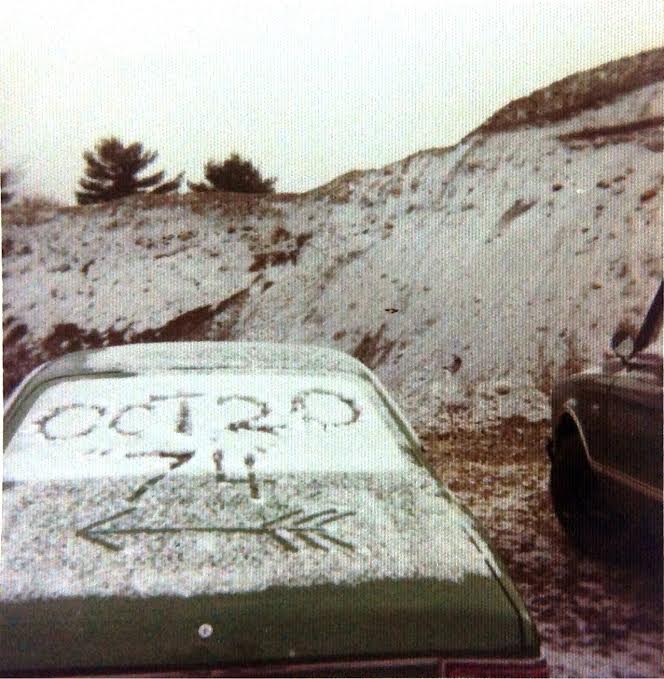
The incident was so memorable for my brother that he had saved photographs from that day and knows the exact date, October 20, 1974. Incredible. A few of those photos are below.

Pepere and deer Motley Crew Hunting Camp in Oct 74 Oct 20 1974

In the moments after Tom had finished reading his poem, I thought more about the old hunting camp. More than a few of Tom’s autobiographical poems involved boys with their hunting rifles. It was easy for me to relate to these childhood stories. I had grown up in a similar fashion in New Hampshire and Vermont, although a few decades after Tom’s upbringing in Western Massachusetts.

My brother came up to Vermont a few months ago and we decided to tool around a bit and found ourselves heading through Wallingford on Route 140, on our way to Tinmouth. Billy hadn’t been out there since childhood. I, on the other hand, had gone out a few summers before with Bruce to show him the land that was a part of so many childhood memories. I used to call the annual rite of going there as a very young child, “going to Vermont.” When I was nine, we moved to Vermont. Pépère died shortly thereafter and the camp lasted just a few years following that, until Mémère died when I was 12.

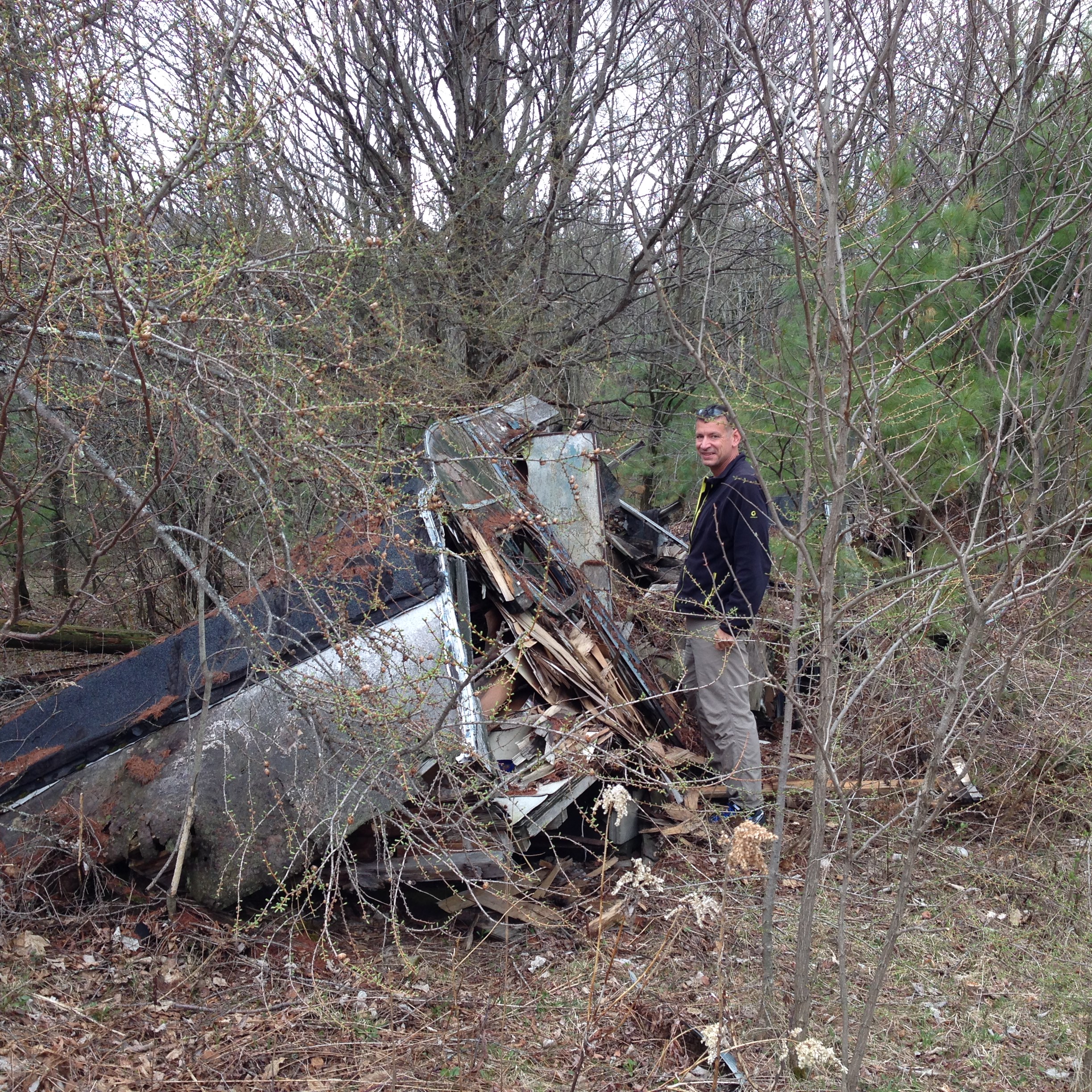
When Billy and I pulled up to the old cemetery in Tinmouth, we parked the car on the opposite side of the road, jumped the gate, and headed into the field, in search of the old camp and the outhouse. The trailer was there, a caved in pile of trash, and the outhouse was nowhere to be found.

Camp as trash

It Was Like Camping

Standard

Before CFI photos

I had no idea that my threat to reveal my parents’ inn-keeping stories would get such an enthusiastic response. Given that it did, I decided to strike while the iron is still hot. I’ve been telling my own stories about the inn since I was nine years old. This post includes some of my memories from those first few days in March of 1978, when we first moved into the inn. Next time, I’ll follow up with recollections from that same period, from my parents, innkeepers Ruth and Bill.

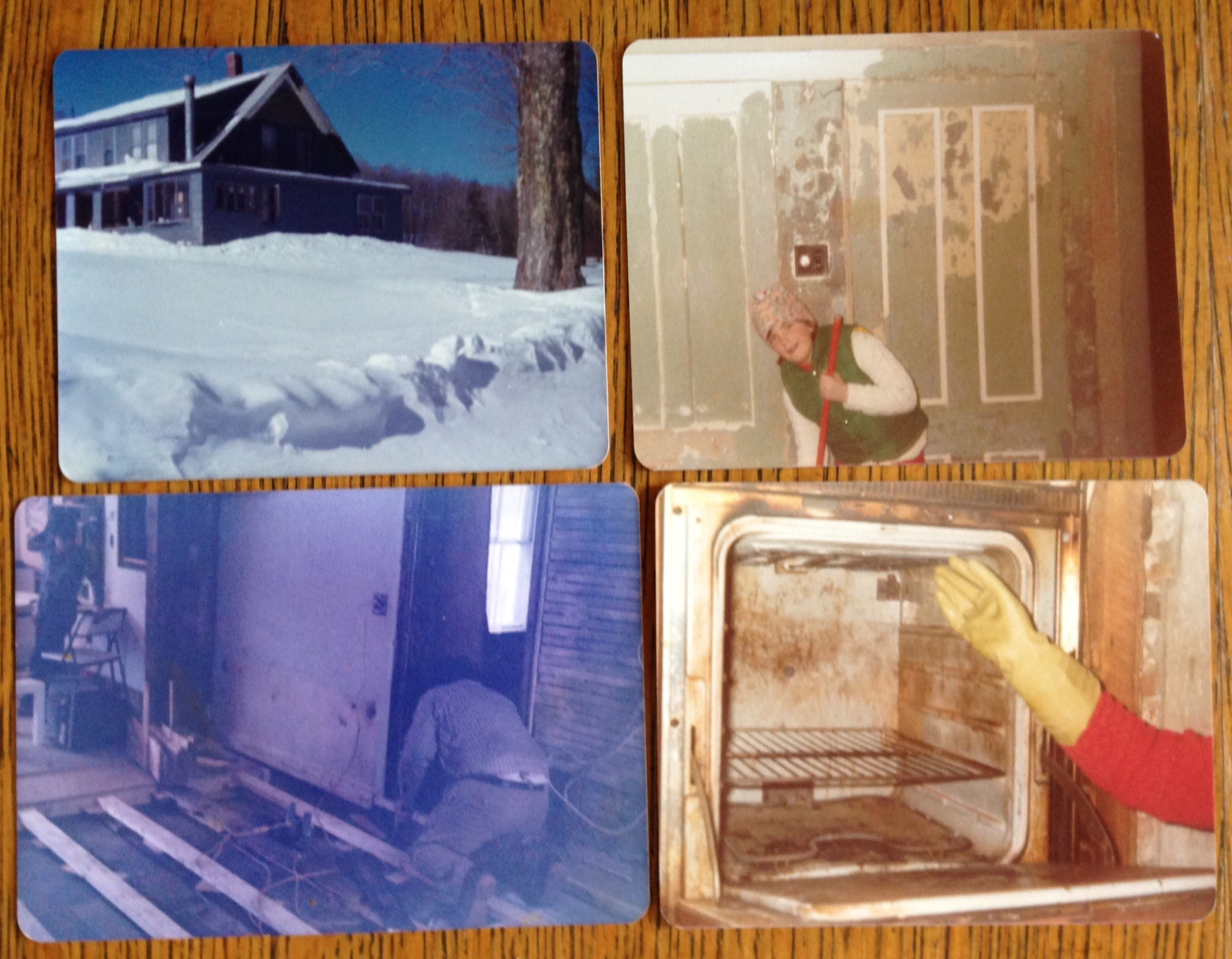
Last time, you were left with the image of me crying in the car, not wanting to come to grips with the reality that, after all, I wasn’t moving to the Snow Mansion on the hill as I’d been fantasizing I would. Instead, our new home was a decrepit and, frankly, filthy, old farmhouse that was several years removed from its glory days as a vibrant and beautiful working farm. That is was at the gloomy end of a long winter when we took possession didn’t help matters, since the property seemed even more barren in the ice and snow.

My father lured me out of the car and into our new life by promising me that it would be like camping. And, in the beginning, it really was.

Since the inn was not going to be livable until the garbage was removed and it was properly disinfected, the six of us — our family of five and my dad’s sister, who was co-owner of the soon-to-be Combes Family Inn — took up residence in three of the motel rooms that the previous owner had built as outside units, separate from the main house. These had been the previous owner’s main source of income, particularly during ski season. Our family project was to turn the main farmhouse itself into a beautiful inn, filled with guest bedrooms and common rooms, in addition to upgrading the motel rooms.

My parents moved into room number three, while my brothers, Billy and Wayne, shared room number two.  My beloved Aunt Nancy and I shared room number one, which was closest to the main house. I adored my Aunt Nancy. Before she lived with us at the inn in Vermont, it was always the highlight of my summer to spend time with her. Over the years, she had taught me how to make beds with hospital corners, how to cook scrambled eggs with cheese and how to play various card games, “rummy 500” being my favorite.

This arrangement lasted for the two weeks it took all of us to clean out the farmhouse. Day one after the move, brother Billy was already loving the new adventure, because mom gave him a crisp twenty dollar bill to clean out a particularly nasty cupboard. He still recalls this story fondly. I, on the other hand, don’t remember about the cleaning phase—I’m sure I’ve put all that nasty business out of my mind! However, I have two strong recollections about those first few days.

One is of my first day joining the fourth grade at Ludlow Elementary School. Kim Benson, who became one of my best friends all through school and is still my friend today, asked me where I was from. When I answered “New Hampshire,” she declared “You are not a flatlander.” As that first day wore on, Kim introduced me to each classmate with the same odd introduction: “This is Sharon, she’s not a flatlander….” I could tell by the reaction of the other kids that this was a very good thing to not be a ‘flatlander’, although I had no idea what it meant. It was so exciting, in fact, that when I got off the school bus that first afternoon, I announced to my parents, “Mom, Dad, guess what? I’m not a flatlander!”  

My other memory of that period was my recognition that Dad was right, it really was like camping. My Aunt Nancy told me stories at night in our motel room before we went to sleep, which reminded me of being around a camp fire. And, since we weren’t yet able to use the kitchen inside, there were many nights that we heated up dinners camp-style, on a little hot plate, and ate them in the motel rooms.

So it was that despite my initial reluctance to step out of that car and into our new life, all of my memories about the start of the incredible adventure called the Combes Family Inn are fond and happy.

Old Stories through New Eyes

Standard

A few weeks ago, my brother sent me a very interesting New York Times opinion piece that’s on topic with the “Dry Year” thread of this blog. In it, poet John Skoyles reveals how he had spent much of his graduate school years drinking heavily, and had engaged in risky behaviors as a result. In fact, he wrote a memoir about it called “A Moveable Famine” without realizing that his own alcohol abuse was a theme in the book. It wasn’t until he reflected back on his story after reconnecting with an old girlfriend that he acknowledged his alcoholism. Although I considered reading the memoir, I’m hoping he’ll write another one that looks back on that time with new eyes.

In the same email in which he alerted me to Skoyles’ article, my brother also suggested that I consider adding a new thread or two to my blog, in order to keep people interested and entertained. He felt I needed to branch out from my too-narrow focus on not drinking, dieting and running. I couldn’t agree with him more, so, as a result, I’m introducing a new thread related to the memoir section of my blog.

My two brothers and I grew up in a busy inn, in a Vermont ski-resort town. Although hard to believe given that they’re now both in their 70’s, my parents still run the very bustling Combes Family Inn. Through the years, my mom has threatened now and then to write a book filled with stories from her and Dad’s 36 years as innkeepers. Since they’ve recently begun formulating their retirement plans and even picked a tentative date for closing the doors on their business, I decided it’s time to help Mom document some of her favorite inn-keeping stories.

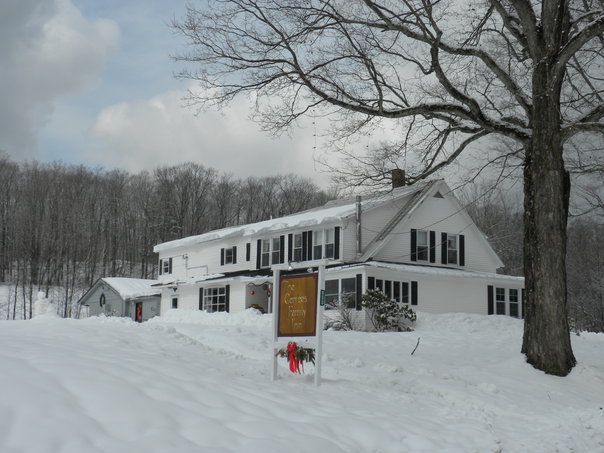
My parents, while in their mid-30’s, had a dream of becoming innkeepers, long before it became fashionable. My mom was always a great cook and my dad an exceptional handyman. When our original hometown in New Hampshire was becoming over-developed, they began looking for an inn in earnest. They looked for two years to find a suitable one in either rural New Hampshire or Vermont, where they could raise their three young children while creating a business.

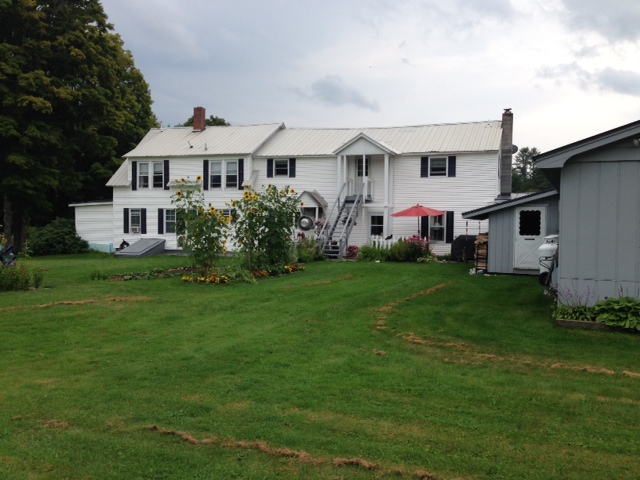
My mom’s story doesn’t make sense unless you understand how vibrant and beautiful the inn and its property are today. The photos below give you a taste of what I’m talking about. There are two photos of the inn and the grounds today and four of the “before” pictures.

“I’ll tell you the very first inn-keeping story that I want people to know,” Mom said the other night, after I mentioned this new idea for a blog thread. She was addressing me, my father, my husband Bruce, and my brother Bill, who is visiting for the long July 4th weekend. “The story relates the moment when we all walked through that door, as we took possession of the house in March, 1978,” she said.

“The entrance way had piles of garbage and large, opened bags of large-animal feed. Wafting out of the first room beyond the entrance was the smell of animal feces. A quick look inside, revealed more garbage and a partially collapsed ceiling,” she related. “Our cat, Gimpy, was so skeptical about the place that he wouldn’t walk through the doorway. I’ll never forget that I turned to look at my eldest child Billy, after Gimpy walked away from the front door. Billy, who was just 11 years old at the time, shook his head and asked ‘What have you gotten us all into?’”

Little did any of us know then that 36 years later the inn would be still be in business. Although I have heard the story a million times, I have no recollection of the cat’s disgust or my brother’s reaction, because, in a similar reaction as my cat, I ran back to the car and refused to get out again. I just sat in the car and cried. When my parents came back to force me out, I kept screaming “I want to go to the Snow Mansion!”

I was referring to one of the handful of other inns my parents had looked at before finally selecting the ramshackle farmhouse.  What I called the “Snow Mansion” was really the Snowvillage Inn, a resort near Conway, New Hampshire that had a large pond, tennis courts, and rolling fields. It’s still around today. This is what it looks like now. When we left our home in Merrimack, New Hampshire, in my mind, the Snow Mansion was the type of place we were moving to.  In fact, it was with considerable pride on my last day in elementary school that I told everyone I was moving to the Snow Mansion.

What my nine-year-old self and my cat Gimpy couldn’t conceive of was the potential that my parents had seen in the place. According to my mother, as she reflected back on why they risked uprooting their three young children and moving to start a new life in a house that could truthfully be described as “a dump”: “It was a place we could put our own mark on and start our new business slowly. We loved the area. It was near a small town with a village center with a growing ski resort, and it had a local school for you kids. And, on top of all that, the house itself had more than 50 acres and was on a country back road with a great view.”

Once each month, I’m going to interview my mom and share her stories. Some of them are absolutely hysterical.

Fiddlehead Season

Standard

Fleeting, fragile spring.
A hunt before they unfurl.
Fiddlehead season.

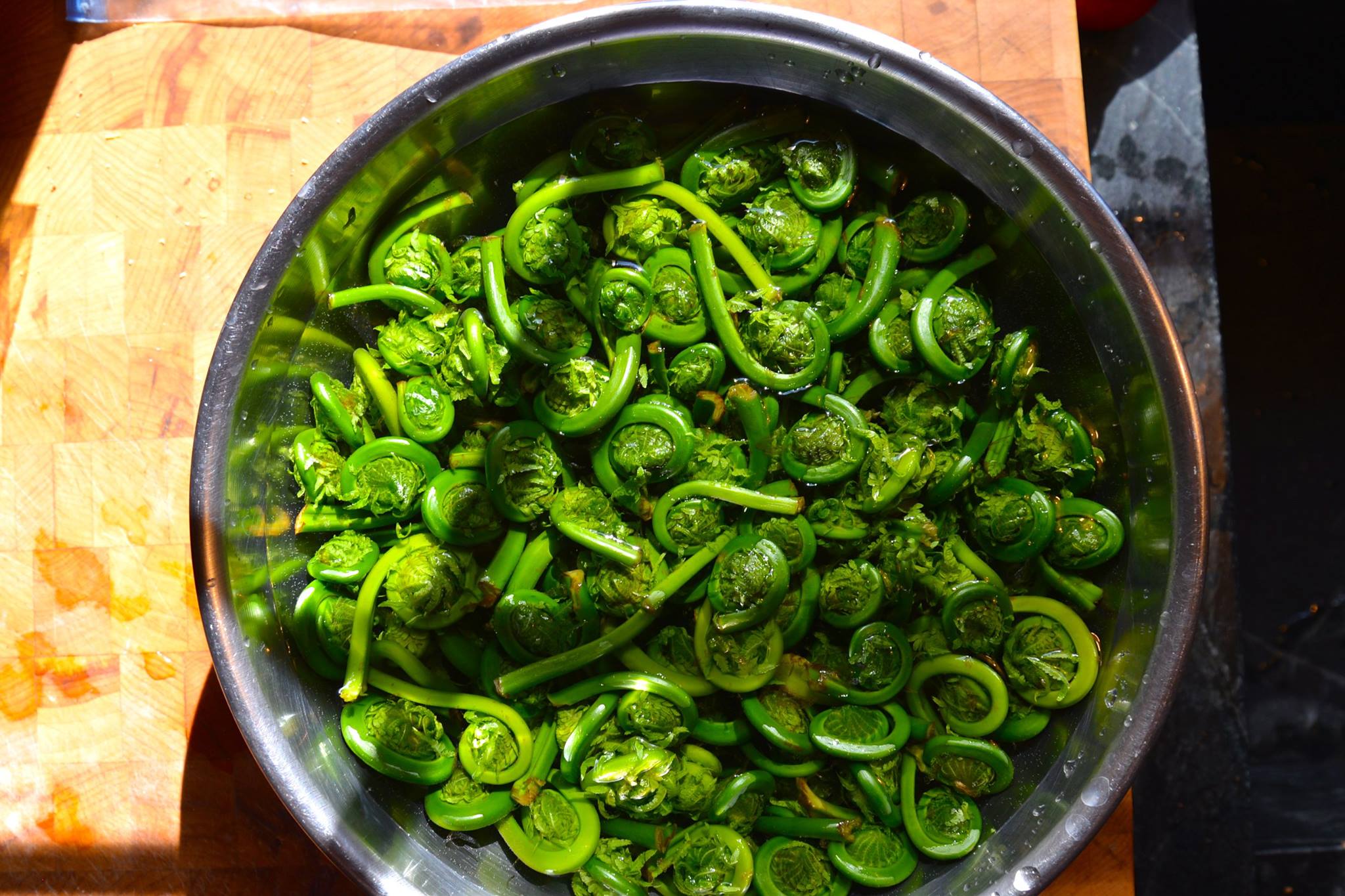
Last year, I started writing a memoir and completed the first section, which is titled “Fiddlehead Season.” There’s something about the fleeting nature of this part of spring that reminds me of childhood, both my own and generally. Below is a condensed version of a small section of my memoir with an update from last weekend tacked on the end.

Image

(Only one variety of fern is edible and you have to pick them when they are still tightly wound in early spring.)


The father of a childhood friend has a hobby of foraging and had become somewhat famous locally because of this. He was very successful in fiddlehead season, so much so that it truly amazed me after I had moved back home and started foraging for fiddleheads myself. He was also the only person I personally knew who is an avid mushroom forager. I have always hated mushrooms, so this skill was something I had never learned to appreciate.

One spring after my husband and I moved back to my home town, I got a phone call out of the blue. My friend’s dad announced himself then said: “Sharon, let your mom know that I have a bunch of fiddleheads for her. You can come by the house any time.” Click.

The next morning, my mom and I headed over there. We weren’t even sure which house it was, despite the many times I had gone over there as a child. It’s funny how, over time, you can lose faith in your memory. Is it the white one next to the brick house or the other one in front of that? Luckily, we were saved by the lady of the house, who popped out of their front door when she saw our slowing car.  We met her at the open doorway, through which she handed us some Ziploc bags and told us to head out back to take as many fiddleheads as we wanted. We found them soaking in water in a large white bucket in the shade, under the eaves of their house.

I’ve received similar calls most springs since then, and sometimes I’d even go by the house myself and just help myself to fiddleheads from the bucket in the back.  It had become an early spring routine. But the calls stopped two years ago and I learned that my friend’s father’s health had begun to fail and he was no longer able to forage.

Last summer, I had arranged for some of my friends from out of town, who have a keen interest in Vermont mushrooms, to meet and discuss mushroom foraging with my friend’s father. He had diligently prepared by assembling several photographs of different local mushrooms he himself had taken through the years. He had also marked up several reference books with notes and tabs. Although my companions already seemed to know quite a bit about the edible mushrooms in the area, I could tell they were gleaning helpful tidbits and were thrilled with all of the preparations and visual aids.

I wasn’t really participating in the conversation, except by picking up a photo here and there, nodding, and asking a few tangentially related questions.  My mind wandered to other things and then, finally, to fiddleheads. As they kept talking about puffballs, chanterelles, and whatever else, I decided that I wasn’t going to leave that house without knowing that secret spot where he successfully forages for all of those fabulous fiddleheads every spring.

When the mushroom conversation started to slow and I could sense that my companions had learned a lot about fungi and were very happy to have a few great leads on where to look for certain types, I eased my way back into the conversation again. “Do you always say that it’s April first when you go out picking fiddleheads?” I asked. “May first,” he replied. “May first.” “And…you go somewhere along the river?” I probed further…

****

Last weekend, my husband, Bruce, dropped me off at the bridge at the end of the road. I got out of the car with my baseball cap, my iPhone, and two pairs of scissors stuffed into our spaghetti strainer, which was set inside our green plastic vegetable strainer. I carried these items in my right hand and used my left to move sticks and trees and bushes out of my path. I went directly to the river bank and it wasn’t easy going.

Young green shoots were all over the place, mostly covered with dead twigs and long, brown grass that had become matted against the ground over the long, snowy winter. I went toward one patch of green and then another and another, ruling them all out. Then I made my way methodically south, staying about the same distance from the edge of the river. After moving a ways downstream, I noticed some unfurled fiddleheads to my left, the side that was away from the river. I hadn’t expected this. I was told the ferns were on the riverbank. No matter, at least I found them.

At first, I was disappointed to see the tall, thin fiddleheads already unwound, reaching toward the sun, because I thought I was too late. After all, I was told “May 1st.” However, the winter had been long, and when I looked in my usual spots the previous weekend I could see that it was still too early to pick them.

The truth is, they come and go so fast you can’t always plan to harvest them over a weekend. I knew that. I should have come during the work week. I was berating myself with these thoughts when I saw a large tight mound of perfect, tightly furled fiddleheads. They were large, and a deep, dark green, reminiscent of the ones I bought at a local market last spring. After I cut them, I spotted several others just like them nearby.

They were there all along. I just couldn’t see them when I was distracted by the unfurled ones.

Image

(My husband and I picked more than two pounds of fiddleheads at the secret spot.)

If you ever plan to be in northern New England in early May and have an interest in picking fiddleheads, check out my “how to” guide on Facebook.

Any Damned Fool

Standard

Talking with a friend of mine last week about our respective running schedules, I was reminded of a lesson I learned at basketball camp the summer before my freshman year of high school.

Image(Above: Armed with the knowledge I gained at basketball camp, I made varsity my freshman year. I’m in the back row, with the short, poofy hair, in between the two girls with glasses.)

When I asked my friend about her running plans for the weekend, she said that she was going to “try to make time for a run.” I know this might sound harsh, but it became clear to me in the middle of our conversation that my friend wasn’t going to be running. Sure enough, when I checked in with her on Sunday night, she said she hadn’t run.

Clearly, I don’t have the ability to read minds or to predict the future. A long time ago, however, through my own trial and error, I learned that exercise is just like anything else in life. The first step to achieving something is to actually believe that it will happen.

What does this have to do with basketball camp? When I went to K.C. Jones‘ Celtics Basketball Camp after 8th grade, the former Celtics assistant coach, Donald “Ducky” Meade, told us a story on this very topic that I have never forgotten. In fact, his story is the sole recollection I have from that whole week at camp. It’s a life lesson worth its weight in gold, and certainly worth the cost of one week of summer camp!

The story Ducky told went something like this:

There is a very close basketball game and the key player on the other team has been scoring over and over again. It’s clear to the coach that there’s just no way his home team is going to win, if they can’t shore up their defenses against this one, hot-shot player. 

So the coach turns to the bench and walks toward one of the players–let’s call him Jimmy.  The coach says to him, “Jimmy, I need you to go in there right now and stick with #14. Do not let him score again.”

Jimmy immediately stands up and says, “Coach, I’ll try,” and then moves toward the score keepers to check-in.

The coach steps between Jimmy and the check-in table and says, “Any damned fool can try. Sit down.” He then points to another player and asks him to go into the game instead of Jimmy.

After telling the story, Ducky asked us why the coach didn’t put Jimmy in. None of the girls, including me, immediately understood why, and thought it was really mean of the coach to bench Jimmy. A few of us shook our heads, indicating “No.”

Ducky was a very, very small older man who was extremely energetic and animated. He nearly went ballistic that we didn’t understand the point of his story. So, he jumped around in front of us and explained that, in sports you have to commit 200%, and really believe that you are going to succeed in order to do so. And that’s why Jimmy didn’t get to play in that game. By saying the he would “try” he indicated to his coach that he wasn’t fully committed, and that, inside, he did not have true belief that he could stop that other player from scoring.

After hearing the explanation, it made perfect sense to me. In sports and in life, I’ve been reminded of this truth many times since. In fact, in the short time since I decided to write about this topic, a significant event involving athletic belief has taken place that puts an even finer point on my story. It is much more powerful and positive than the tale about my friend who didn’t fully commit to planning for a weekend run.

I am referring to the story of Meb Keflezighi, who won yesterday’s Boston Marathon, the first American man to do so since 1983. Meb certainly is one of the great American long-distance runners of his generation, having won the New York City Marathon (2009) and earned an Olympic silver medal at the Athens summer games (2004). However, he is turning 39 in a few short days and was listed on the 4th page of the elite runners list in the Boston Marathon press kit (the names were placed in order of their fastest marathon times).

Because of this, no one believed that Meb was going to win the Boston Marathon. When I say “no one,” of course, what I really mean is that no one other than Meb himself thought that he could win it. Yet, on a fine running day in Boston, Meb beat scores of runners significantly younger and faster than himself and crossed the finish line first, thus cementing himself among the all-time great American runners.

Not everyone who believes they will be successful will be. However, if you do not believe it, you can be pretty certain that you will fail.

Cat School

Standard

I enjoyed putting together my last post, “My Sibs and Me.” So much so, in fact, that I have to tell one more sibling story.

As I’ve mentioned many times in the past, I am writing a memoir. In the process, I have dusted off several boxes of old books, letters, journals and photographs. The last box I opened had several reports and personal mementos from my primary and secondary school years in Ludlow, Vermont.

Among these items was a typed, untitled, one-page story with an “A-” in red ink at the top. I have no idea how old I was when I wrote it, or what my assignment was. The story, however, is one that I have told many, many times through the years, even very recently. In all of those recountings, though, I never quite told it the same way that it was typed by my young self on a nearly transparent sheet of typing paper.

The story takes place when I was four and my brother Wayne was five. At the time, our older brother Bill was six and in first grade. I was in my first year of a pre-school program, and was very worried about how my cat passed his days while I was away at school. My mother eventually found my many nagging questions about my cat—“Gimpy”—tiresome and finally told me that Gimpy also went to school. She explained that, as soon as we three kids went off to school in the morning, Gimpy went to “Cat School.”

Image

(Above: This photo was taken about the same time that the “cat school” story takes place.)

On the morning of the story, the pre-school was closed, but the elementary school was still in session. This meant that Billy went off to school while Wayne and I stayed home. Shortly after Billy had left, I looked out the window and spied Gimpy walking around outside. I ran to Wayne and told him to come with me and look, because “Gimpy must be on his way to Cat School!”

Below is exactly what was written on the typed page that I found.

___

When I was about four, my family lived in Merrimack, New Hampshire. Our house had some woods and a swamp behind it.

One day, my brother, Wayne, and I decided to follow our cat, Gimpy, around to see where he goes during the day. The cat started to head for the woods, so Wayne and I chased him. I don’t remember how long we followed Gimpy, but somewhere in the middle of the woods, we lost sight of him.

I started to cry and Wayne said, “I know how to get home from here.”

We started heading back the way we came and came to the swamp. Wayne walked right through the water and when he got to the other side, he said, “Sharon, come on, it isn’t that deep.”

I said, “I don’t want to get wet!”

Finally, I went in the swamp and got wet all the way up to my chest. After a bit of walking we reached a place we’d seen before.

I said, “Our house is this way.”

“No, stupid, it’s this way,” Wayne said.

Wayne went his way and I went mine. When I couldn’t see Wayne any more, I started screaming and (then turned around and) caught up with him. I followed him through the woods and finally we were out of the woods and in our back yard. Mom was standing next to the house yelling at us. We ran to Mom and hugged her. I think she was crying.

Mom said, “Oh, I’m so glad to see you! If you ever run away again I’ll give you both a licking!”

By: Sharon Combes

___

Finding my old school essay allowed me to see this childhood episode through my own eyes as a child. I imagine myself being too embarrassed at the time that I wrote it to acknowledge that I believed my Mom when she said that our cat went to school. Therefore, I completely left that part out, despite it being a fundamental part of the story.

This tale is a special sibling story to me, because it’s a microcosm of my relationship with Wayne when Billy wasn’t around. We had our differences, but we still turned to each other and, ultimately, bonded.

I’d love to hear other childhood sibling stories. Please comment on this post with one of your favorites.

My Sibs and Me

Standard

Evidently there’s a Siblings Day. I became aware of it late on April 10th through the numerous postings in my Facebook newsfeed about it. When the hell did that happen? And, if it’s now a bona fide day of family recognition, where will this end? I found out there’s already a Cousins Day, for example. Assuming I’m not the only person asking these questions, I’m writing to provide a little background on this obscure holiday, as well as a few personal thoughts about my own siblings.

Image


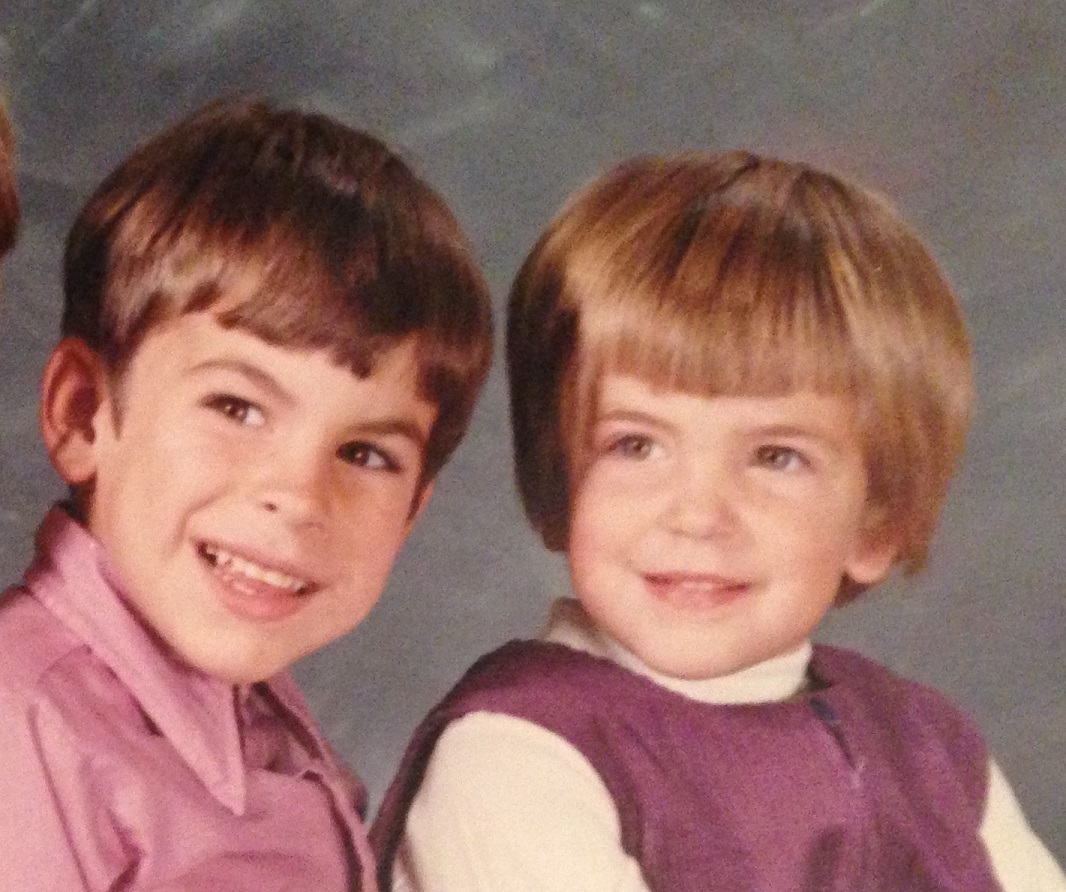
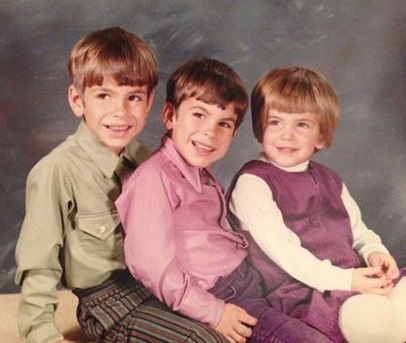
(Above: I couldn’t resist putting out a Belated Siblings Day post on Facebook with this sweet Combes sibling portrait from the early ‘70s.)

Here’s what Wikipedia says: “Siblings Day (sometimes called National Siblings Day) is a holiday recognized annually in some parts of the United States on April 10 honoring the relationships of siblings. Unlike Mother’s Day and Father’s Day, it is not federally recognized, though the Siblings Day Foundation is working to change this. Since 1998, the governors of (41) states have officially issued proclamations to recognize Siblings Day in their state.”

There’s a lot more information about it in this fact sheet located on the foundation’s website. For example, the date of April 10th was picked because it was the birthdate of the founder’s deceased sister.

That, as the website says, “the bond between siblings is usually the longest relationship of a person’s life” is certainly true. I remember pointing this out to my nephew Liam a year or two ago when he was angsting about his sister and yelled at the top of his lungs, “I hate Ayla!!!” I counseled him then that the day will come when he needs his sister and that his relationship with her will be the single-most important one he develops through his whole life. Of course, he looked at me like I had corn growing out of my ears.

I certainly had my ups and downs with my two brothers, Bill and Wayne, particularly when we were very young.  I remember being terrified of being left alone with Wayne and often used to wonder, had Billy not been there to protect me from him, whether I ever would have survived toddlerhood.

There was the time Wayne pushed my head under water while I was learning how to swim, the time he got a bunch of neighborhood kids to help him stick me in a hammock and spin me over and over again until I threw up, and the countless times he used to kick me under the table.

Wayne never minded getting in trouble, so he seemed to make it his goal to take me down with him. “Wayne is kicking me under the table!” I once yelled.  Dad replied in a millisecond, “at least he’s quiet about it.”

The most depressing instance was the time Wayne successfully got my mother to believe that I had used the F word.  I was probably 8 at the time and I had never even considered using the F word. I’ll never understand, given Wayne’s history of shenanigans, why my mother believed him. At any rate, Mom attempted to wash my mouth out with soap – except there wasn’t any water involved. I can still taste the chunks of Coast that were scraped off in my mouth under my little buck teeth.

It went on like this for years between me and Wayne.  Our relationship didn’t turn around until Billy went to college and it was just the two of us left at home, he a high school senior and I a junior. Wayne had realized that it was handy to have a popular sister who could potentially provide access to girls.

In my “new” relationship with Wayne, I was touched that he asked my help putting clothes together for him to wear to school. He seemed to blossom in several ways that last year home.  In actuality, I probably just noticed Wayne more now that Billy was gone. That allowed me to get to know him better and to appreciate him. 

Billy and I, on the other hand, seemed to have been made from the same mold.  We were high academic achievers, extroverts, and captains of our high school sports teams. That we were so much alike and so difficult to ignore were probably the main reasons Wayne seemed to have so much trouble growing up. He might have felt unnoticed and under-appreciated, and that led to outlandish behavior to get attention.

In high school, Billy and I had a nightly ritual of doing homework around the massive oak table in our family room. It was always a race to finish our assignments by 11:15, when the local NBC news broadcast ended, so we could watch “Star Trek.”  When the mildly attractive and shapely meteorologist started her fumbling assessment of the next day’s weather, it was a signal to finish up, close the books, and be alert for Captain Kirk.

Like the motley crew on the Enterprise, Billy and I always seemed to get along.  Those nights doing our homework together are among my fondest childhood memories.

Then the inevitable happened. We all grew up and went our separate ways. Bill was off to Clarkson University in upper state New York and then into the nuclear core of the U.S. Navy, where he remains today, presently out to sea with the rank of Captain. Wayne found college life wasn’t for him and joined the U.S. Air Force where he had a very long and decorated career. He’s retired from the military, but is back at the Wright Patterson base in Dayton, Ohio, as a civil servant. I went around the world in my studies and early career, ultimately settling back home in Vermont, just a stone’s throw from where the three of us grew up.

All of this sibling talk is making me realize that we really need to make a point of getting together much more often. I’ve no opinion on whether or not there should be a national holiday to celebrate siblings. It all seems a bit too Hallmark-ish for me.  However, I am very thankful to have taken this time to reflect on my relationship with my two brothers. And I’m pretty darned lucky to be stuck with them. 

My Vacation in Haiku

Standard

It’s been one of those weeks when I’ve thought of several blog topics. Yet, nothing really gelled into anything coherent enough.  Since I’m still getting lots of positive feedback about my posts on Laos, particularly about my iPhone photography, I’ve settled on the easiest post of all: my vacation haiku interspersed with photos.

Most of these were written on the flight(s) back home, motivated by my disappointment that I had been on vacation for 10 days and hadn’t written a single poem to commemorate the journey.

I was traveling to visit my step-daughter and her friend, two professionals in their 20’s who wisely and boldly took a four-month sabbatical to enjoy life and create new experiences.  Fittingly, I took my trip to join them with a friend of my own from college, Angela Casey, with whom I had spent time in several Asian countries 20 years ago. Twenty years? Say it isn’t so!

The first haiku is about youth and how many experiences seem wasted on them. Of course, the motivation for this poem isn’t about Erin and Abby. It’s driven by my recent discovery of my old journals as I prepared to write my memoir, and, likewise, having thumbed through more than a thousand travel photos prior to Angela’s first visit here to Vermont to plan this trip.

“Regret” is wisdom
Condemning youth for missing
The signs. Damned hindsight!

Image
(Above: Me in rural southern China in 1997. Below: Me and Ange at the Raffles Hotel in Singapore in April 1995.)
Image
The next one is about my return with Angela to Beijing after so much time. Some of my feelings and opinions developed during the course of my nearly three years as an ex-pat in Beijing were chronicled in this post a month ago.

Beijing, have you changed?
Wi-Fi. Starbuck’s. House of Cards.
Emperor’s new clothes.

Image

(Above: Ange and me in a Beijing hotel lobby in 1994. Below: The two of us on Tian’anmen Square a few weeks ago.)

Image


Image

(Above and below: After nearly 20 years, Beijing was different and the same, all at the same time.)

Image

Most of our trip was spent in Luang Prabang, Laos. This ancient capital and former French colony is situated along the Mekong River and is still home to dozens of active and well-preserved Buddhist temples. None of the four of us had been to Laos before, so we were all discovering new things. Every day was packed with enough bold color and interesting experiences to last a lifetime.

Many of the subjects that formed these haiku were also described in earlier blog posts. And, certainly, also caught in pictures. If you are interested in finding out more about the topics of these poems, be sure to use the links to get more info.

Along the Mekong,
Bold color and bounty spring
From the river banks.

Image

(Above: Despite the “dry season”, the Mekong banks were alive with crops and boats. Below: Members of a family that farms eggplant along the river. They graciously let us to use their lean-to for our lunch-time break from kayaking.)

Image

Morning market throng
Fruits, spices, meats of all hues,
Dizzy the senses.

Image

(Above: Spices at the Luang Prabang morning market. Below: Just a small section of the market.)

Image

Each temple yard yields
Countless monks by sunrise to
Walk tourist-lined streets.

Image

(Above and below: Different perspectives of the “tak bat” or morning alms-giving, a daily ritual at sunrise in Luang Prabang’s historic downtown.)

Image

Blazing orange robes
Catch sunbeams between the trees
To clothe patient monks.

Image

Image

Fearful ride atop
Elegant, beautiful “beast.”
Wild elephant ride.

Image

(Above: My view from atop the elephant as we headed into the river at Elephant Village. Below: Our guide’s photo of me and Erin, after I moved from the seat to the elephant’s head.)

Image

With the months of preparation and research that went into the trip, including a reunion with Angela and a series of planning sessions, not to mention the work and household planning to accommodate it, it’s amazing how quickly the trip arrived and then was gone. With all of the unforgettable experiences that comprise the journey, there’s still nothing like coming back home to Vermont again.

There and back again.
Like Bilbo’s long adventure,
Nowhere else like home.

Image